With the explosive growth of the global new energy vehicle (NEV) industry, the safety and performance optimization of power batteries—the core component—have become critical industry priorities. Heat generated during battery charging and discharging, if not managed effectively, can reduce range efficiency at best or trigger thermal runaway risks at worst. In this context, high-temperature resistant silicone sheets, leveraging their unique material properties, have emerged as an innovative solution for battery pack sealing and thermal management.
1. Material Properties and Industry Compatibility of High-Temperature Resistant Silicone Rubber Sheets
High-temperature resistant silicone rubber sheets are based on organic silicone polymers, enhanced with specialized high-temperature-resistant fillers through advanced processing. Their core advantages include:
Extreme Temperature Resistance: Stable operation in environments ranging from -50°C to 300°C, with high-performance variants, this makes them ideal for extreme temperature fluctuations during fast charging and high-load discharging.
Superior Sealing and Cushioning: High elasticity and compression recovery allow these sheets to fill microscopic gaps between battery modules, effectively blocking moisture, dust, and corrosive gases while dampening vibrations that could damage battery structures.
Insulation and Flame Retardancy: Excellent dielectric strength (>15 kV/mm) and UL94 V-0 flame retardancy certification enable suppression of fire spread during short circuits or localized overheating, enhancing system safety.
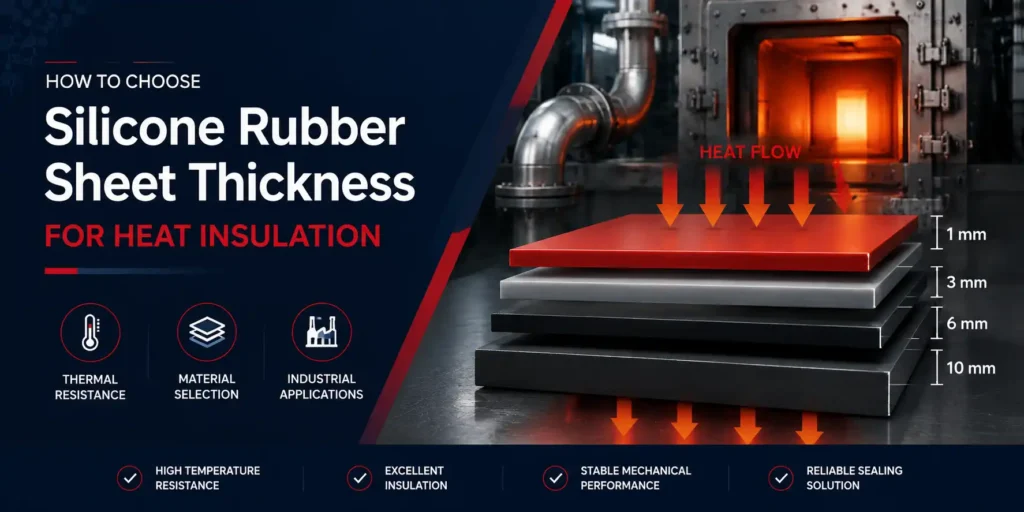
These silicone rubber sheets are designed to withstand high temperatures. During vehicle operation or charging, intense chemical reactions in the battery pack cause temperatures to rise rapidly. Unlike conventional materials, which can fail under these conditions, high-temperature resistant sheets act as a robust ‘firewall’. They prevent heat damage such as component failure, battery performance degradation and even safety incidents.
Their sealing ability is equally remarkable, effectively blocking out dust, moisture and other contaminants. In the harsh environments that NEVs often encounter, these sheets act as an invisible layer of protection. They keep the battery pack in a stable and clean working environment, extending its lifespan.
The sheets also offer excellent compatibility with battery packs. They are soft and elastic, allowing them to conform to complex battery pack shapes for comprehensive sealing. Chemically inert, they don’t react adversely with electrolytes or metal casings, ensuring normal battery operation.
2. Innovative Applications in Battery Pack Sealing
Inter-Module Sealing and Thermal Equalization
Traditional sealing materials like foam or plastic sponges suffer from limited heat resistance (<150°C) and low thermal conductivity (0.03–0.1 W/mK). Customized high-temperature silicone sheets (thickness: 0.5–3 mm; thermal conductivity: 0.8–5 W/mK) not only provide physical sealing but also transfer hotspot heat to cooling plates or housings, maintaining battery pack temperature differentials within 5°C to extend cycle life.
Flexible Cushioning Layers Between Cells
For cylindrical or prismatic cell stacks, silicone sheets are cut into tailored shapes to fit cell gaps. Their flexibility absorbs volume expansion stress during charging/discharging, preventing cell deformation. High-thermal-conductivity variants optimize heat distribution between cells, mitigating localized overheating.
Thermal-Insulative Interfaces for Battery Housings
In liquid cooling systems, silicone sheets serve as filling materials between cells and cooling plates, efficiently transfer heat while ensuring insulation against leakage. Compared to potting adhesives, silicone sheets’ non-curing properties and detachability streamline production, boosting assembly efficiency by over 30%.
In terms of weight and cost, they outperform many other sealing materials. Their lightweight nature helps reduce vehicle weight, enhancing driving range. With stable raw material sources and mature production processes, they lower manufacturing costs for automakers while ensuring performance.
As NEV technology evolves, the innovative application of high – temperature resistant silicone rubber sheets in battery pack sealing has become a game – changer. High-temperature resistant silicone sheets, with their “sealing-thermal management-insulation-flame retardancy” four-in-one performance matrix, are redefining power battery pack design paradigms. For automakers and battery producers, adopting tailored silicone solutions is not just a technical upgrade but a strategic move to capture market leadership. They boost battery safety and reliability, giving automakers a competitive edge in the market and driving the industry toward greater efficiency and safety.
3. Conclusion
Nanjing Lsan’s product lineup is diverse, including not only high – temperature resistant sheets but also general – purpose/regular silicone rubber sheets, food – grade silicone rubber sheets, gas phase silicone rubber sheets, insulating silicone rubber sheets, anti – static silicone rubber sheets, and flame – retardant silicone rubber sheets. We can meet the varied needs of different industries and scenarios, providing high – quality and professional silicone rubber sheet solutions for fields like electronics, electrical appliances, and food processing.