Whether used for sealing, insulation, or cushioning, silicone sheeting is rapidly becoming the go‑to material in modern manufacturing, food processing, electronics, and automotive engineering.
This updated guide for 2025 explains what makes high‑temperature silicone rubber sheets unique, where they are used, and how to choose the right grade for your application.
1. What Is a High‑Temperature Silicone Rubber Sheet
A silicone rubber sheet is a flexible sheet or roll made from a cured silicone polymer compound. When formulated for high‑temperature environments, the rubber is specifically blended with heat‑stabilizing fillers and cross‑linking agents to maintain elasticity and tensile strength even after prolonged thermal exposure.
Key material properties:
- Temperature range: –60 °C to +230 °C continuously, short peaks up to +300 °C.
- Stable under heat and cold: mechanical properties change very little after repeated thermal cycling.
- Excellent dielectric strength: ideal for electrical insulation.
- Chemical & ozone resistance: unaffected by many oils, acids, and outdoor weathering.
- Non‑toxic and odor‑free: suitable for food and medical environments.
2. Why Choose Silicone Over Conventional Rubber
Most elastomers such as EPDM or NBR begin to degrade around 130 – 150 °C. In contrast, silicone rubber keeps its resilience and color well above these limits. Its unique Si–O siloxane molecular backbone delivers outstanding thermal stability and low compression set.
In short: silicone rubber lasts longer, seals more consistently, and requires fewer replacements — an essential advantage for industrial plants trying to lower maintenance time and total cost of ownership.
3. Typical Industrial Applications
• Automotive and Transportation
Used for engine bay gaskets, turbo‑charger seals, fuel system cushions, and EV battery insulation pads.
Silicone handles oils, engine heat, and vibration that destroy traditional rubber.
• Food Processing and Packaging
FDA‑ and EU‑compliant silicone sheets line conveyors, oven doors, and heat‑seal jaws.
Non‑stick behavior and easy wash‑down simplify sanitation.
• Electronics and Electrical Equipment
Functions as insulating pads, thermal barriers, and protective gaskets inside inverters, transformers, and 5G modules.
High dielectric strength prevents arcing while dissipating heat.
• Medical and Pharmaceutical Machinery
Platinum‑cured variants perform in sterilizers and peristaltic‑pump systems, offering biocompatibility and resistance to cleaning chemicals.
• Industrial and Mechanical Systems
Used in furnaces, compressors, boilers, and hot‑press machines as reliable sealing and vibration‑absorbing material.
• Aerospace and Defense
Retains flexibility from –70 °C to +250 °C; applied in aircraft panels, ducts, and cabin insulation where safety and consistency are critical.
4. Material Grades and Options
| Type | Characteristics | Common Use |
|---|---|---|
| Standard High‑Temp Silicone | General industrial use, bright red or gray | Machinery, general sealing |
| Fabric‑Reinforced Silicone Sheet | Polyester/fiberglass insert for dimensional stability | Gaskets under high pressure |
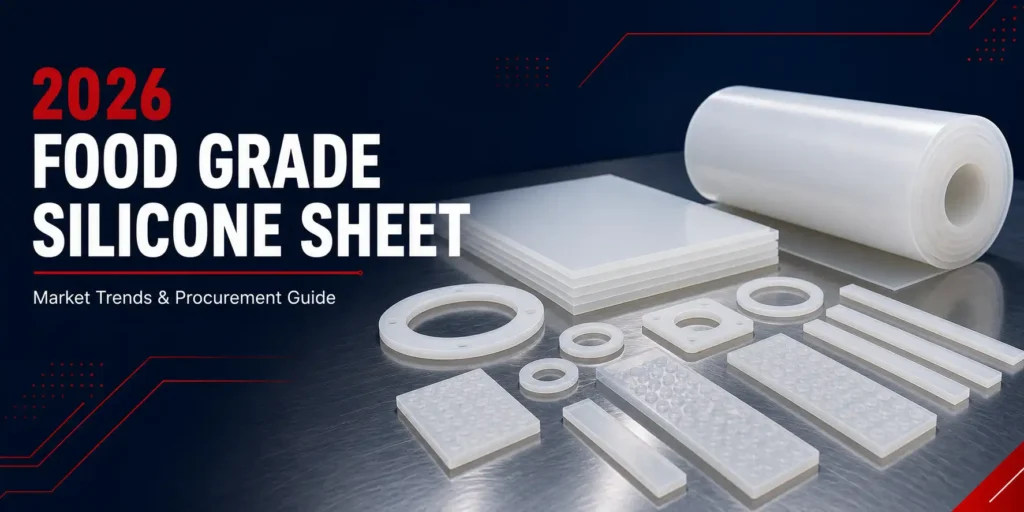
| FDA Food‑Grade Silicone | Pure translucent, odorless, non‑toxic | Food and pharma production |
| Flame‑Retardant Silicone (UL 94 V‑0) | Low smoke, self‑extinguishing | Transportation, construction, electronics |
| Conductive/Graphite‑Filled Silicone | Enhanced thermal or electrical properties | EMI shielding, heat spreaders |
5. Key Advantages of High‑Temperature Silicone Sheeting
- Exceptional heat resistance: functions where others crack or carbonize.
- Cold flexibility: no brittleness at sub‑zero temperatures.
- Weather & ozone stability: ideal for indoor/outdoor systems.
- Chemical resistance: handles many solvents and greases.
- Longevity: service life often exceeds 10 years in industrial setups.
- Clean and inert: does not contaminate adjacent materials.
6. Selecting the Right Sheet – Practical Guidelines
When specifying high‑temperature silicone, consider:
- Operating temperature: identify continuous and short‑term peak exposures.
- Hardness (Shore A 30–80): softer grades (30–40 A) for flexible seals; harder (60–80 A) for structural gaskets.
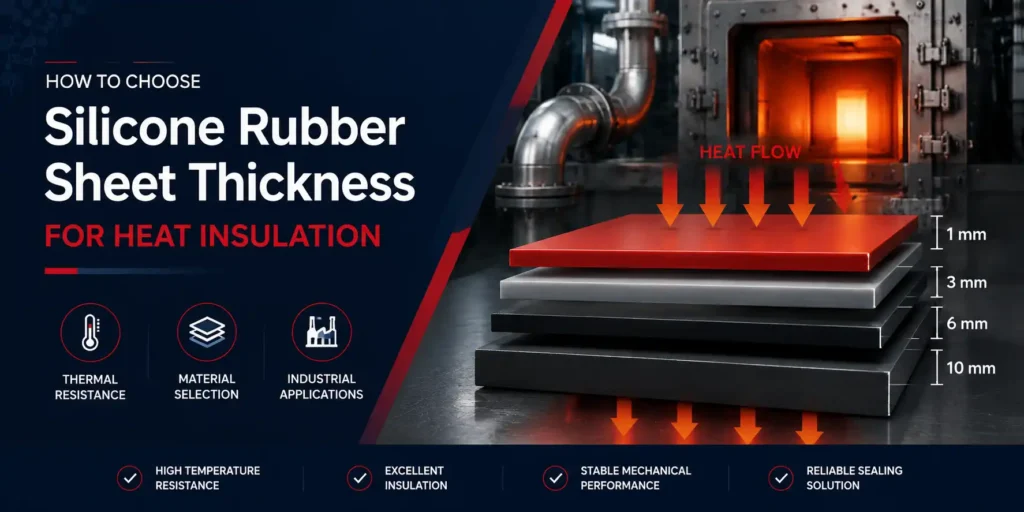
- Thickness: 0.3 mm to 25 mm depending on deflection and pressure.
- Reinforcement: choose fabric‑inserted silicone for high mechanical strength.
- Certifications: check requirements (FDA, UL, ROHS, REACH).
- Color & finish: red for heat applications, translucent for clean areas, or custom tones for identification.
A short consultation with experienced material engineers prevents over‑specification and ensures compatibility with adhesives or surfaces.
FAQ
Q1 – How hot can silicone sheets safely operate?
Continuous operation 230 – 250 °C; short peaks to 300 °C without surface deformation.
Q2 – Can they be used in ovens or autoclaves?
Yes, food‑ and medical‑grade silicone withstands repeated heating and sterilization cycles.
Q3 – Are high‑temperature silicones available in rolls or cut parts?
Yes, Lsane supplies full rolls, sheets, or precision die‑cut gaskets ready for installation
Durable, flexible, and inherently heat‑resistant, High Temperature Silicone Rubber Sheets form the backbone of countless industrial systems—from automotive engines to clean food lines. Their stability across extreme conditions ensures operational safety, reduced downtime, and extended lifespan.
If your project faces demanding thermal challenges, choosing a certified supplier like Lsane means more than material supply — it means expert guidance, consistent quality, and long‑term reliability.