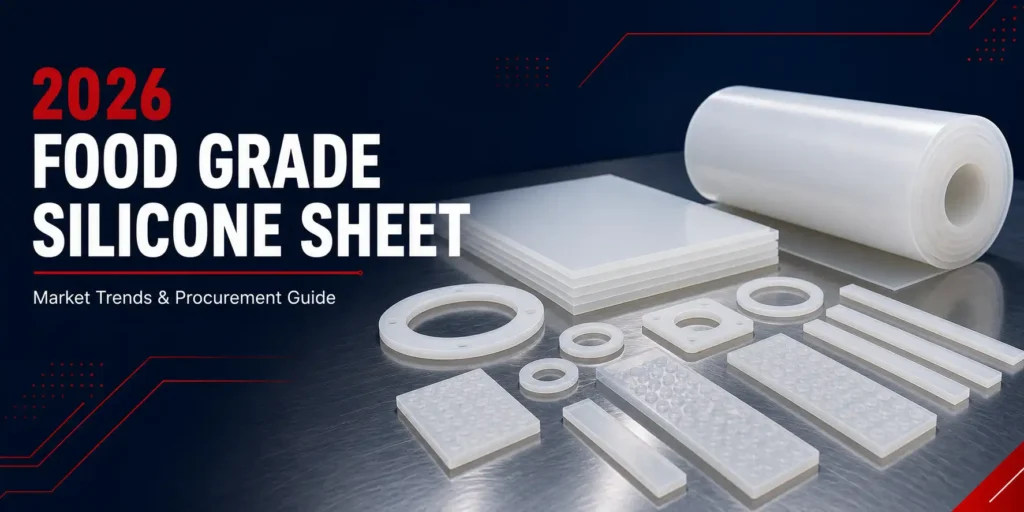
Food grade silicone sheet is becoming more important in food processing, packaging machinery, beverage equipment, baking systems, and custom gasket manufacturing. In 2026, buyers are not only asking for silicone sheet material; they are asking for cleaner documentation, better traceability, custom cutting, stable supply, and materials that fit real production environments.
For procurement teams, engineers, and OEM buyers, choosing the right food grade silicone sheet is no longer just a price comparison. The better question is: can this material meet the working temperature, food-contact requirement, sealing design, cleaning process, documentation request, and delivery schedule?
Why Food Grade Silicone Sheet Demand Is Growing in 2026
Food and beverage manufacturers are under pressure to improve hygiene, reduce downtime, and maintain more complete supply chain records. This directly affects how buyers choose rubber sheet materials, gaskets, pads, and machine-contact components.
Several trends are driving demand:
- More automated food processing and packaging lines
- Higher expectations for sanitary equipment design
- More attention to food-contact material documentation
- Increased need for custom gaskets, washers, strips, and pads
- Procurement teams reducing supplier risk through better qualification
- More frequent requests for TDS, SDS, FDA, LFGB, RoHS, REACH, or batch documents
The FDA’s Food Traceability Final Rule also shows how the industry is moving toward stronger recordkeeping and faster product traceability. The FDA notes that the rule focuses on additional traceability records for certain foods and key data elements across critical tracking events. While this does not automatically apply to every silicone sheet purchase, it reflects a broader direction: food supply chains want clearer records and more accountable suppliers. Source: FDA Food Traceability Rule
Trend 1: Buyers Want More Than “Food Grade” Claims
In the past, many suppliers simply described a product as “food grade.” In 2026, that is often not enough.
Buyers now ask more specific questions:
- What compound is used?
- Is it peroxide cured or platinum cured?
- Is post-curing available?
- What temperature range can it handle?
- Is the material suitable for repeated contact or only limited use?
- Are test documents available?
- Does the material meet the requirements for the destination market?
For the U.S. market, rubber articles intended for repeated food-use applications are commonly discussed in relation to 21 CFR 177.2600. The eCFR lists rubber articles intended for repeated use and includes silicone elastomers among the materials described under the section. Source: eCFR 21 CFR 177.2600
For European buyers, food contact materials must comply with EU rules when placed on the European market. The European Commission explains that food contact materials include packaging, machinery used to process food, kitchenware, and tableware, and that these materials should not endanger health or affect food quality, taste, smell, or appearance. Source: European Commission Food Contact Materials
Trend 2: Custom Cutting Is Becoming a Standard Requirement
Many buyers do not want raw sheet only. They need finished parts.
Common requests include:
- Food grade silicone gaskets
- Silicone sealing strips
- Silicone washers
- Silicone pads
- Adhesive backed silicone sheet
- Die-cut silicone rings
- Custom silicone rubber parts based on drawings
This is especially important for packaging machinery, filling equipment, dairy systems, beverage lines, baking equipment, and OEM appliance parts.
A food grade silicone sheet supplier that can also provide custom cutting helps buyers reduce extra processing steps. Instead of buying sheet from one supplier and sending it to another cutting factory, buyers can source sheet material and finished parts from one production partner.
Trend 3: Procurement Teams Are Checking Application Fit More Carefully
A food grade silicone sheet may look simple, but the application can be very different.
For example:
- A baking pad may need heat resistance and repeated cleaning performance.
- A beverage equipment gasket may need compression recovery and low odor.
- A packaging machine strip may need wear resistance and accurate dimensions.
- A food-contact liner may need a smooth surface and proper documentation.
- A custom die-cut washer may need tight tolerance and batch consistency.
This means procurement teams should not only ask “How much is the silicone sheet?” They should also ask what the sheet will touch, how long it will be used, what temperature it will face, and whether it will be cleaned with chemicals, steam, hot water, or dry wiping.
Trend 4: Documentation and Traceability Are Part of Supplier Selection
In 2026, documentation is part of the product.
Before placing a bulk order, buyers often request:
- Technical Data Sheet
- Safety Data Sheet
- Food-contact declaration
- FDA or LFGB related documentation, when applicable
- RoHS or REACH documents, when needed
- Batch information
- Material color and hardness confirmation
- Drawing revision control for custom parts
A reliable supplier should be able to explain what documents are available and what documents need to be confirmed before production. Buyers should avoid assuming that every white or translucent silicone sheet is automatically suitable for every food-contact application.
How to Choose the Right Food-Grade Silicone Sheet
When comparing suppliers, use a practical checklist.
1. Confirm the Application
Start with where and how the material will be used.
Ask:
- Will it directly contact food?
- Is it used in processing, packaging, storage, or cleaning?
- Will it touch dry food, oily food, liquid, steam, or hot surfaces?
- Is it a gasket, pad, strip, liner, or protective sheet?
- Is the part disposable, replaceable, or used repeatedly?
2. Define the Material Requirements
Important specifications include:
- Thickness
- Shore A hardness
- Color
- Surface finish
- Sheet size or roll size
- Temperature range
- Compression requirement
- Tear resistance
- Adhesive backing
- Tolerance for cut parts
If the part is used as a gasket, thickness and hardness are especially important because they affect sealing pressure and compression recovery.
3. Ask About Custom Processing
If you need finished parts, confirm whether the supplier can provide:
- Knife cutting
- Die cutting
- CNC cutting
- Waterjet cutting, if suitable
- Adhesive lamination
- Custom strips
- Gaskets and washers
- Prototypes before bulk production
For custom silicone gaskets, send drawings in PDF, DXF, STEP, or clear dimensioned sketches. If there is no drawing, a physical sample or detailed photo with measurements can help.
4. Check Documentation Before Ordering
Do not wait until the goods are finished to ask for documents.
Before quotation, tell the supplier:
- Destination market
- Required standard
- Required certificate or test document
- Whether food contact is direct or indirect
- Whether the customer needs batch-level documents
- Whether the material must meet color or odor requirements
This prevents delays and avoids choosing the wrong compound.
5. Evaluate Supplier Communication
A good supplier should ask questions, not just quote quickly.
For food-grade silicone sheet projects, useful supplier questions include:
- What is the working temperature?
- What food or liquid will the material contact?
- What is the cleaning method?
- Do you need sheet, roll, or finished cut parts?
- What tolerance is required?
- What documentation is needed?
- What annual quantity do you expect?
These questions help prevent material mismatch.
Procurement Checklist for 2026
Before buying food grade silicone sheet, prepare the following information:
- Product name: food grade silicone sheet
- Application: food processing, baking, beverage, packaging, gasket, pad, etc.
- Size: sheet size, roll width, or cut part dimensions
- Thickness
- Hardness
- Color
- Quantity
- Drawing or sample
- Operating temperature
- Direct or indirect food contact
- Cleaning environment
- Required documents
- Packaging requirements
- Delivery schedule
The more complete the RFQ, the faster the supplier can recommend the right solution.
Why Work With LSAN for Food-Grade Silicone Sheet Projects
LSAN supports silicone rubber sheet and custom silicone rubber products for industrial, food-related, clean-use, and OEM applications. For buyers who need more than raw material, LSAN can help review material options, custom thickness, hardness, color, sheet size, and cut-to-size requirements.
If your project needs finished gaskets, strips, pads, washers, or other silicone rubber products, LSAN can support drawing-based discussion and practical manufacturing recommendations.
You can learn more from our Food Grade Silicone Sheet page or explore general Silicone Rubber Sheet options.
Conclusion
In 2026, food grade silicone sheet procurement is moving toward cleaner documentation, better supplier communication, custom processing, and application-specific material selection. Buyers should not choose only by price or appearance. The right supplier should help confirm the application, material grade, processing method, documentation requirements, and delivery plan.
For food processing equipment, packaging machinery, beverage systems, baking applications, and custom silicone gaskets, a clear RFQ and a qualified silicone sheet supplier can reduce risk, save time, and improve production reliability.
FAQ
What is food grade silicone sheet used for?
Food-grade silicone sheet is used for food-processing equipment, baking pads, beverage and dairy seals, packaging-machine gaskets, clean liners, washers, strips, and custom silicone pads.
Is a food-grade silicone sheet always safe for direct food contact?
Not automatically. Suitability depends on the exact silicone compound, curing process, additives, working conditions, and available documentation. Buyers should confirm the required standard before ordering.
Can food grade silicone sheet be cut into custom gaskets?
Yes. Food grade silicone sheet can be cut into gaskets, washers, rings, strips, pads, and custom profiles based on drawings or samples.
What should I send when requesting a quote?
Send thickness, hardness, color, size, quantity, application, working temperature, food-contact position, drawing or sample, and required documents such as FDA, LFGB, TDS, SDS, RoHS, or REACH when needed.