In the electronics manufacturing industry, electrostatic discharge (ESD) is a persistent issue, responsible for over 30% of device failures. This not only affects product quality but also threatens reliability. Anti-static silicone rubber sheets are crucial tools for protecting sensitive electronic components from ESD damage. Acting as “invisible guardians,” these sheets ensure the safety of components throughout the production process. This article will help you understand the dangers of ESD, how anti-static silicone rubber sheets work, their application scenarios, and how to choose the right product for your needs.
1. The Hidden Dangers of ESD
Electrostatic discharge can cause severe and often undetectable damage to electronic components. Here are some of its main impacts:
- Dielectric Breakdown: Semiconductor insulation layers are extremely thin, and ESD can easily penetrate them, leading to leakage or functional failure.
- Metal Fusion: The high temperatures generated by ESD can melt or sever component connections.
- Parameter Drift: In devices like resistors or capacitors, ESD can alter material properties, affecting performance.
- Contamination Issues: Static electricity attracts dust and particles, leading to circuit board contamination or reduced clarity in optical components.
2. How Anti-Static Silicone Rubber Sheets Work
Anti-static silicone rubber sheets are designed to prevent static buildup and discharge. Their surface resistance typically ranges from 10^6 to 10^9 ohms, making them ideal for controlling static electricity. Here’s how they work:
- Moisture Absorption and Conductivity: The sheets absorb moisture from the air, forming a thin conductive water film on the surface that safely dissipates static electricity.
- High Flexibility: These sheets are highly flexible and can conform to various surfaces like workbenches or conveyor belts, ensuring components are protected from static interference throughout production.
Technical Advantages:
- Conductive Balance: By incorporating materials like carbon nanotubes, the conductivity is adjusted to quickly dissipate static without causing short circuits.
- Multi-Layer Protection:
- Grounding System: Can be connected to grounding devices to safely discharge static.
- High-Temperature Resistance: Can be used in extreme temperatures from -50°C to 250°C, perfect for processes like reflow soldering.
- Friction Reduction: The silicone material reduces friction, preventing static generation.
3. Key Application Scenarios
Anti-static silicone rubber sheets have multiple uses in electronics manufacturing. Here are some key scenarios:
- Production Line Protection:
- Workstations: Placed on assembly equipment, they reduce human-induced static to safe levels (<100V) through grounding.
- Equipment Wrapping: Used on components like feeder nozzles or conveyor belts that are prone to static buildup.
- Precision Component Packaging:
- Transportation Protection: Used as packaging liners to prevent friction-induced static during transit.
- Storage Use: Placed on shelves to reduce static risks caused by humidity.
- High-Sensitivity Device Manufacturing:
- Medical Electronics: Protects sensitive instruments like MRI machines and surgical robots.
- Semiconductor Production: Used as cushioning pads during wafer dicing and chip bonding.
- Adaptation to Special Environments:
- High-Temperature Workshops: Suitable for high-temperature environments in automotive electronics and aerospace manufacturing.
- Cleanrooms: Maintains cleanliness and meets ISO standards.
Additionally, these sheets are durable, resistant to high temperatures (200°C–300°C), and easy to clean. Unlike ordinary materials, they maintain their anti-static properties under extreme conditions, ensuring long-term protection.
4. How to Choose the Right Silicone Rubber Sheet
When selecting anti-static silicone rubber sheets, consider the following three points:
- Resistance Range:
- 10^3–10^6 Ω: Suitable for assembly lines that require rapid static dissipation.
- 10^6–10^9 Ω: Ideal for less sensitive packaging scenarios.
- Physical Characteristics:
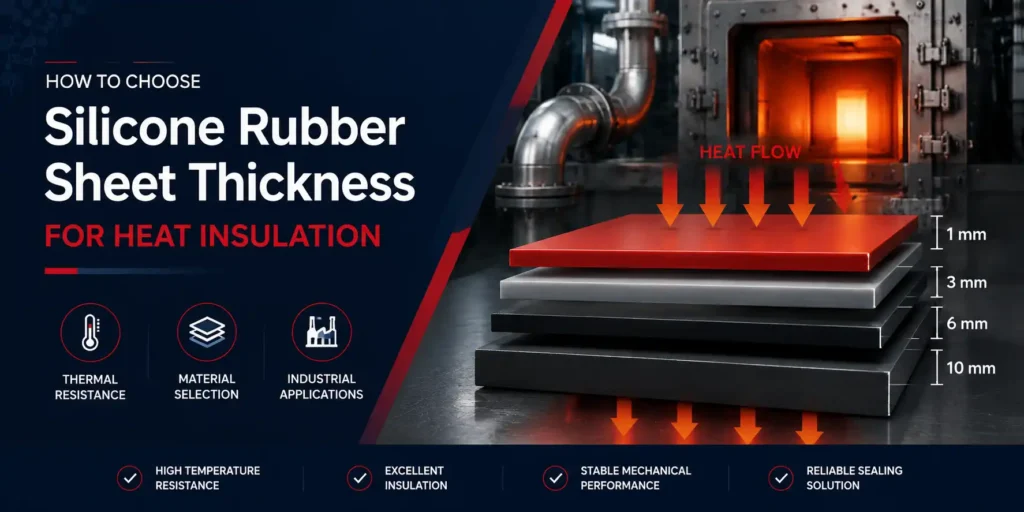
- Thickness: 3–5 mm for a balance of durability and flexibility.
- Hardness: Shore A 30–60 to ensure components are not damaged.
- Certification Requirements:
- Choose products certified by FDA or RoHS for medical or export purposes.
- Check third-party test reports for metrics like electrostatic decay time and chemical resistance.
Conclusion
In the pursuit of micron-level precision in electronics manufacturing, anti-static silicone rubber sheets have evolved from auxiliary materials to essential core protective components. Choosing the right silicone sheet for your needs can significantly reduce component failure rates and improve product quality. This not only saves long-term costs but also enhances brand competitiveness. By using high-quality anti-static silicone rubber sheets, your products will be more reliable, and your business will thrive