There is no single, universally accepted definition of “food grade silicone.” Instead, its qualification depends entirely on the specific food-contact safety regulations of the country or region where the product is sold, distributed, and used. For businesses in the food equipment, beverage, or catering industries, understanding these regional standards is critical to ensuring compliance, avoiding supply chain risks, and meeting customer expectations.
Food Grade Silicone Compliance in the United States
In the U.S., the primary regulatory authority for food-contact materials is the Food and Drug Administration (FDA). Reusable silicone products intended for food contact must adhere to 21 CFR 177.2600—a section of the Code of Federal Regulations that explicitly outlines permitted silicone elastomer formulations and their safe use limits (e.g., restrictions on harmful substance migration).
However, FDA compliance alone may not be enough for commercial applications:
Most U.S.-based food equipment manufacturers, distributors, and end-users (such as restaurants, bakeries, or beverage brands) also require adherence to standards set by NSF International (a globally recognized independent certification body). Two key NSF standards apply to food-grade silicone:
- NSF/ANSI 51: Focuses on materials used in the construction of commercial food equipment (e.g., silicone gaskets for industrial mixers, seals for food storage tanks, or components for commercial refrigerators). Compliance ensures the material is safe for direct or indirect food contact during normal use.
- NSF/ANSI/CAN 61: Applies to materials that contact potable (drinking) water in food-related systems (e.g., silicone tubing for water lines in coffee machines, beverage dispensers, or food processing facilities). This standard prevents contaminants from leaching into drinking water used in food preparation.
For high-risk components like gaskets, tubing, or espresso machine parts, U.S. buyers often mandate independent certification to these NSF standards—not just self-declared compliance.
Key Distinction: NSF Certified vs. NSF Compliant
When sourcing food grade silicone for the U.S. market, it is vital to understand the difference between these two terms—they directly impact product acceptability:
| NSF Certified | NSF Compliant |
| Verified by an independent, NSF-accredited laboratory to meet all requirements of the relevant standard. | A manufacturer’s self-claim that the product meets NSF standards—no third-party testing or verification. |
| Authorized to display the official NSF certification mark (a globally recognized symbol of safety for food-contact products). | Cannot use the NSF mark; claims may be unsubstantiated and carry compliance risks. |
| Preferred (and often required) by U.S. food equipment brands, distributors, and regulatory auditors. | May be rejected by commercial buyers due to lack of independent validation. |
Food Grade Silicone Compliance in Europe
The European Union (EU) and European Economic Area (EEA) follow a distinct regulatory framework for food-grade silicone. To market silicone products in Europe, compliance with three core regulations is mandatory:
- Regulation (EC) No. 1935/2004: The EU’s overarching rule for all materials and articles in contact with food. It mandates that silicone (and other materials) must not:
- Transfer harmful substances to food in quantities that pose health risks;
- Alter the composition, taste, or odor of food;
- Mislead consumers about food safety.
- Regulation (EC) No. 2023/2006: The EU’s Good Manufacturing Practice (GMP) standard for food-contact materials. It requires silicone manufacturers to implement strict quality control processes (e.g., raw material testing, production line monitoring) to ensure consistency and safety.
- National Supplementary Rules: Many European countries impose additional requirements. For example:
- Germany: Compliance with guidelines from the Bundesinstitut für Risikobewertung (BfR) (Federal Institute for Risk Assessment), which sets specific limits for silicone additives and migration levels.
- France: Adherence to DGCCRF (Direction Générale de la Concurrence, de la Consommation et de la Répression des Fraudes) standards for food-contact material safety.
For businesses trading globally, silicone products sold in both North America and Europe must satisfy dual compliance (e.g., FDA 21 CFR 177.2600 + NSF for the U.S.; EC 1935/2004 + BfR for Germany).
Partner With a Trusted Food Grade Silicone Supplier
Navigating global food-contact regulations can be complex—especially for businesses scaling across markets. At Silicone Custom (based in Pukou District, Nanjing City, China), we specialize in manufacturing food grade silicone products that meet both U.S. (FDA, NSF) and European (EC 1935/2004, BfR) standards.
Our offerings include:
- Silicone gaskets, seals, and O-rings for commercial food equipment;
- Food-safe silicone tubing for beverage dispensers and water systems;
- Custom-molded silicone components for espresso machines, bakery equipment, and food processors;
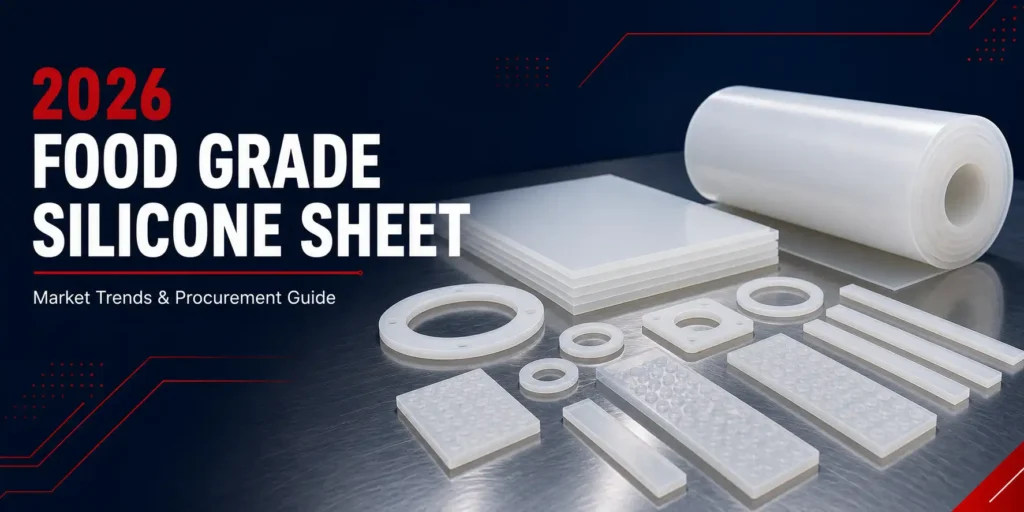
- Food-grade silicone sheets, mats and custom extruded silicone products.
All our food grade silicone products come with full regulatory documentation (e.g., FDA compliance certificates, NSF certification reports, EU migration test results) to streamline your supply chain and audit processes. With years of custom silicone manufacturing experience, we offer one-stop solutions from design, prototyping to mass production, fully meeting your personalized needs.