Choosing the right silicone rubber sheet is not only a material decision. It affects sealing performance, safety, production efficiency, compliance, and long-term maintenance cost. A sheet that looks correct on paper may fail early if the hardness is wrong, the temperature range is too narrow, or the grade does not match the working environment.
Silicone rubber is widely used because it remains flexible over a broad temperature range, resists weathering, and can be made in many thicknesses, colors, surface finishes, and hardness levels. That flexibility is useful, but it also creates a sourcing challenge. Buyers need to clearly define the application before requesting a quote or approving a sample.
A gasket used in a food processing line may need a different grade than an insulation pad used in electrical equipment. A protective sheet used near heat may need different performance than a strip used for packaging equipment. If you are comparing suppliers, it helps to work with a silicone rubber sheet manufacturer that can discuss material grade, tolerance, curing system, processing, and documentation together.
1. Start With the Real Working Environment
The first step is to define where and how the material will be used. Many buyers start with thickness or price, but the working environment matters more. Silicone performs well in many demanding conditions, yet each application places different stress on the sheet.
Ask practical questions before choosing a grade. What temperature will the sheet face during normal use? Will it touch food, chemicals, oil, water, steam, or outdoor air? Does the sheet need to seal, cushion, insulate, protect, or be converted into gaskets? Will it be compressed again and again? Does the project require FDA, RoHS, REACH, or other compliance documents?
A general-purpose silicone rubber sheet may be enough for ordinary sealing, padding, lining, or insulation work. But applications in food processing, medical devices, electrical equipment, aerospace support parts, or high-temperature machinery often need a more specific material. The key is to choose an industrial silicone sheet for the real operating condition, not for a simple catalog label.
Buyer tip: When you ask for a quote, share the application, temperature, thickness, hardness, color, quantity, compliance needs, and final processing method. Better input leads to better material recommendations.
2. Choose the Right Silicone Grade
Silicone sheet grades are not interchangeable. The right grade depends on safety requirements, exposure conditions, and the final product. General-purpose silicone is often used for industrial sealing, cushioning, insulation, and protection. It is flexible, weather resistant, and suitable for many non-regulated applications.
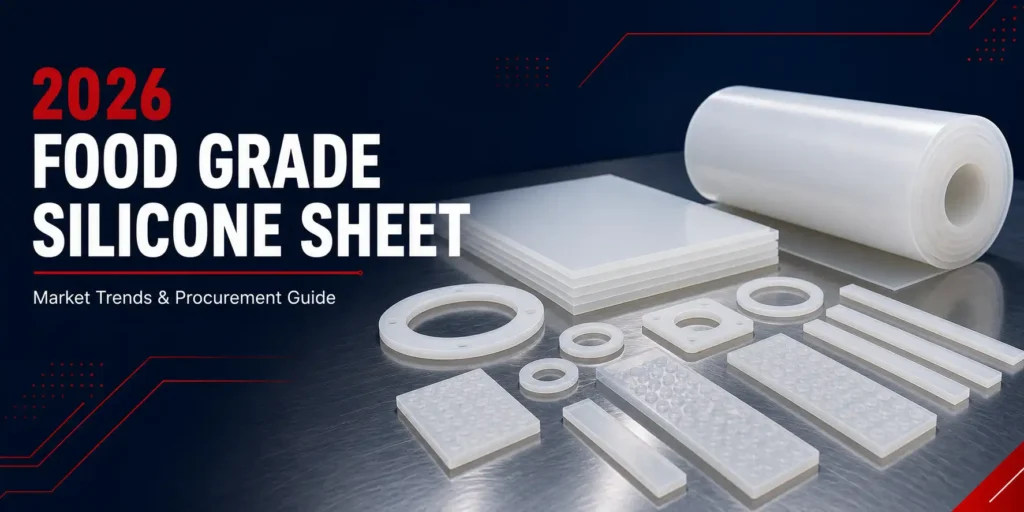
A food grade silicone sheet is designed for environments where the material may contact food or beverage processing equipment. Buyers often use this grade for gaskets, pads, liners, seals, and machine components in food-related systems. If your project involves food contact, do not treat general silicone as a substitute. Confirm material compliance before production.
High temperature silicone is used when the sheet must remain stable near heat. Some applications involve ovens, heat sealing equipment, industrial machinery, thermal pads, or heated air systems. A high-t emperature silicone sheet can help reduce failure risk when standard material would age too quickly.
Platinum cured silicone may be selected when buyers need cleaner curing chemistry, better transparency, or reduced concerns about curing by-products. Medical grade silicone is used in healthcare, laboratory, and sensitive product environments. These applications should be reviewed carefully because the final requirement may depend on market, device type, and regulatory pathway.
3. Match Hardness to Sealing and Handling Needs
Hardness is usually measured in Shore A. A lower Shore A value means the sheet is softer and easier to compress. A higher value means it is firmer and more resistant to deformation. The best choice depends on the sealing pressure, surface condition, and installation method.
Soft silicone sheets are useful when the material must seal uneven surfaces, absorb vibration, or compress with low force. Medium-hardness sheets are common for general industrial sealing and conversion. They offer a balance between flexibility, handling, and durability. Harder sheets are better when the part needs more structure, wear resistance, or dimensional stability.
Hardness should not be chosen by guesswork. If a gasket is too soft, it may squeeze out or lose shape. If it is too hard, it may not seal well. For a custom silicone rubber sheet project, share the compression force, surface condition, drawing, and sealing requirement with the supplier. If you are replacing an old part, send the sample or technical data so the original hardness can be compared.
| Selection Factor | Why It Matters | Typical Buyer Question |
|---|---|---|
| Grade | Controls safety, compliance, purity, and operating range. | Do we need general, food-grade, medical-grade, or high-temperature silicone? |
| Hardness | Affects compression, sealing, handling, and shape retention. | Will the sheet seal with low force or need more structural support? |
| Thickness | Changes cushioning, insulation, fit, cost, and cutting performance. | What tolerance is required for assembly or die cutting? |
| Processing | Determines whether sheet, strip, roll, adhesive backing, or finished parts are needed. | Will the material be cut into gaskets, washers, pads, or seals? |
4. Select Thickness, Width, and Tolerance Carefully
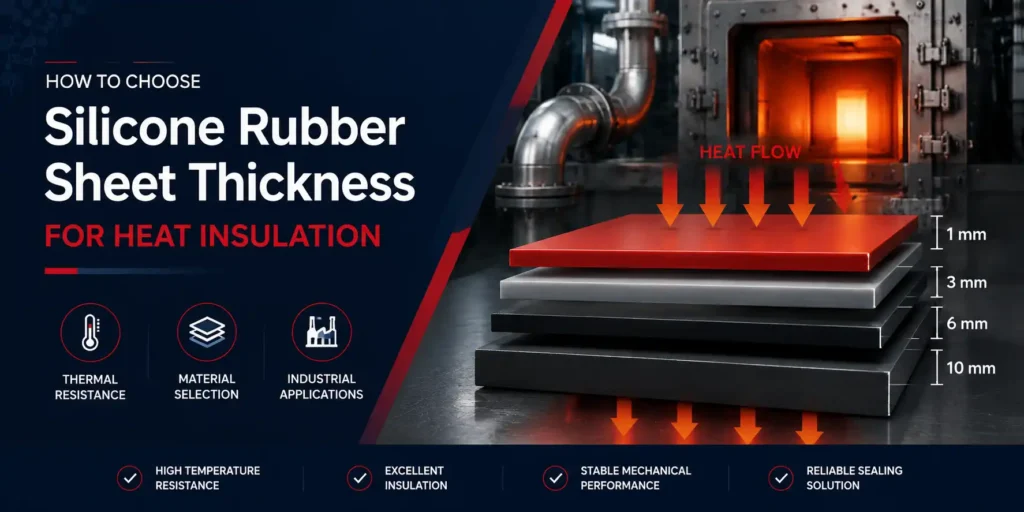
Thickness affects performance, cost, processing, and installation. A thin sheet may be easier to cut and fit into compact spaces. A thicker sheet may provide better cushioning, sealing, compression, or insulation. The right choice depends on how the sheet will be installed and what job it must perform.
Thin sheets are often used for membranes, insulation layers, die-cut parts, and lightweight barriers. Medium sheets are common for gaskets, seals, pads, and general industrial use. Thick sheets may be selected for heavy-duty protection, cushioning, lining, or vibration isolation.
Tolerance is just as important as nominal thickness. In precision applications, small variations can affect sealing pressure or assembly fit. If your application needs a tight tolerance, say so early. Do not assume every supplier uses the same tolerance standard.
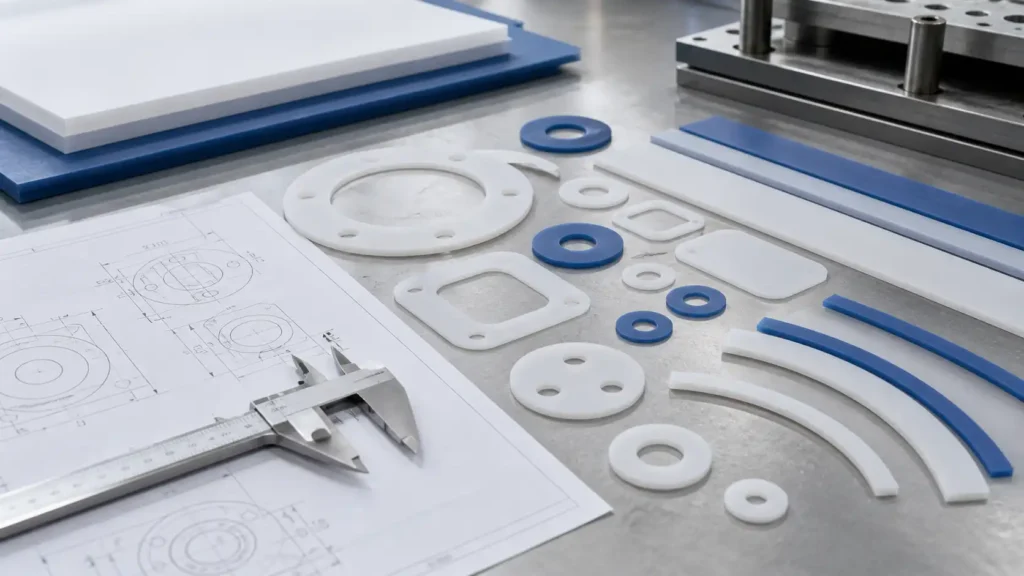
You should also consider the final processing method. Will the sheet be cut into rectangles? Die-cut into washers? Converted into silicone gaskets and seals? Laminated with adhesive? Slit into strips? Each step can affect thickness, edge quality, and dimensional control.
5. Check Temperature Range and Heat Aging
One reason silicone is widely used is its ability to remain flexible in hot and cold environments. But buyers still need to check the real temperature conditions. There is a difference between the short-term peak temperature and the continuous working temperature. A material may tolerate a brief heat spike but lose strength faster under continuous heat exposure.
If the sheet will work near ovens, heaters, engines, thermal equipment, or hot air systems, ask about continuous temperature resistance and heat aging. Heat can change color, reduce tensile strength, influence compression set, or shorten service life. If the application has heat and pressure at the same time, review both temperature resistance and compression behavior.
Cold conditions also matter. Some rubber materials become stiff or brittle in low temperatures. Silicone usually performs better than many conventional rubbers in cold environments, which makes it useful for outdoor equipment, freezer-related equipment, and applications that experience seasonal temperature changes.
6. Consider Compliance, Safety, and Documentation
In B2B purchasing, documentation can be as important as the material itself. Many buyers need proof for audits, customer approval, or internal quality control. Common documents may include material data sheets, compliance statements, test reports, certificates, or production traceability records.
Food-related applications may need FDA-related confirmation. Medical or healthcare projects may need stricter documentation. Industrial projects may require RoHS, REACH, flame-retardant information, or customer-specific quality records. Before ordering, define which documents are required. If you ask after production, the supplier may not be able to provide everything retroactively.
This is one reason to work with a supplier that understands industrial and export requirements. A low-cost material without the right paperwork may create delays later, especially when your customer asks for proof before accepting the product.
7. Think About Custom Processing Early
Many buyers do not use a silicone sheet as a full roll or flat sheet. They cut it, punch it, laminate it, slit it, or convert it into finished parts. If you need secondary processing, discuss it before choosing the material.
Custom options may include custom thickness, hardness, color, surface finish, rolls, sheets, strips, adhesive backing, lamination, die-cut gaskets, washers, seals, special packaging, and private labeling. A custom silicone rubber sheet project should begin with the final part in mind.
For example, a material that is easy to handle as a roll may not be ideal for precise die-cutting. A very soft sheet may need special handling. A thick sheet may require different cutting equipment. A sheet with adhesive backing may need liner selection and storage control. If possible, share drawings, application photos, or assembly details.
8. Evaluate the Supplier, Not Only the Sheet
A silicone sheet is not just a commodity when it is used in industrial production. Supplier capability affects lead time, consistency, problem-solving, and long-term cost. A strong supplier should help you choose materials, confirm tolerance, support samples, and solve processing questions before mass production starts.
When choosing a silicone rubber sheet manufacturer, review whether the company produces or only trades the material. Ask whether they can support custom thickness, hardness, color, finish, adhesive backing, and converted parts. Check whether they understand food grade, medical grade, high temperature, and industrial applications. Confirm whether they can provide samples and documents for your project.
For many buyers, the lowest unit price is not the best value. A cheaper sheet can become expensive if it causes sealing fail ure, poor cutting performance, delivery delays, or repeated supplier changes. The better question is whether the supplier can help reduce risk across the full project.
9. Common Mistakes When Buying Silicone Rubber Sheet
Many material problems come from simple early-stage mistakes. The first mistake is choosing by thickness only. Thickness matters, but grade, hardness, tolerance, and environment matter just as much.
The second mistake is using general silicone in regulated applications. Food, medical, and sensitive industrial uses may require specific material grades and documentation. The third mistake is ignoring compression set. A sheet used as a gasket must recover well after pressure. If it loses elasticity, the seal may fail.
The fourth mistake is not testing samples. Even when specifications look correct, real testing helps confirm fit, sealing, cutting, and installation. The fifth mistake is not sharing enough application details. Suppliers can give better recommendations when they understand temperature, pressure, chemicals, surface condition, and final use.
The final mistake is treating all silicone sheets as the same. Two sheets may both be called silicone, but their curing system, filler, tolerance, finish, and performance can be different. Avoiding these mistakes makes purchasing smoother and reduces the chance of field failure.
10. A Practical Selection Checklist
Before requesting a quote, prepare a simple checklist. It does not need to be complicated, but it should answer the key questions. This helps both the buyer and supplier. It also reduces back-and-forth communication and makes the quotation more accurate.
- Application: sealing, insulation, cushioning, lining, gasket conversion, or protection.
- Environment: temperature, liquid, chemical, outdoor, steam, oil, or food contact.
- Grade: general, food grade, medical grade, high temperature, conductive, or flame retardant.
- Hardness: Shore A range and compression requirement.
- Thickness: nominal value, tolerance, width, sheet size, or roll size.
- Processing: cutting, punching, lamination, slitting, adhesive backing, or molding.
- Compliance: certificates, test reports, traceability, or customer documents.
- Quantity: sample, trial order, batch order, or long-term production.
Choose for Performance, Not Only Price
The best silicone rubber sheet is the one that fits the application, meets the required standards, and performs consistently in real working conditions. Price matters, but it should be evaluated together with grade, hardness, thickness, tolerance, processing, documentation, and supplier support.
For ordinary industrial use, a standard sheet may be enough. For food contact, high heat, medical use, precision sealing, or custom conversion, buyers should define the requirements more carefully. A small material choice can make a large difference in service life and production reliability.
If you are developing a new product, replacing an old gasket, or sourcing sheet material for OEM production, start with the application details. Then choose the right grade, confirm the technical requirements, request samples, and work with a supplier that can support both material production and custom processing.