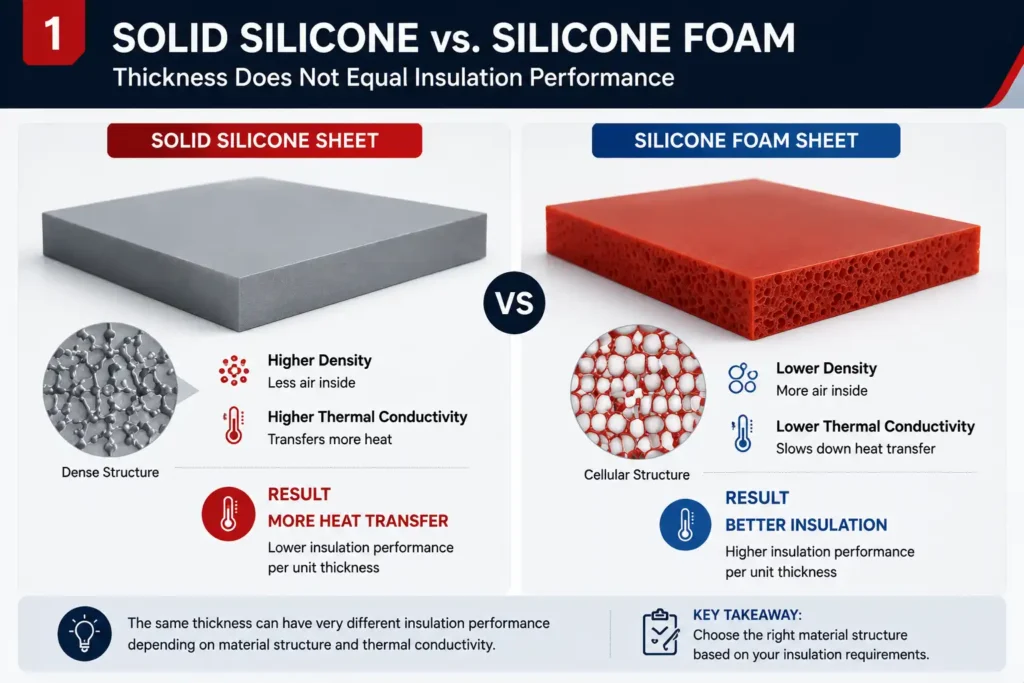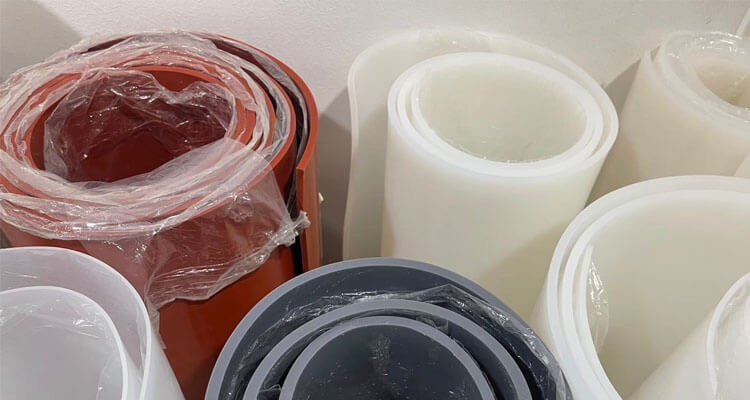
A silicone sheet specification often starts with thickness and a Shore A number. For industrial buyers, those details are useful only when they connect to the finished part. A sheet that feels suitable by hand may behave differently after cutting, installation, and exposure to the operating environment.
Choose silicone shore hardness by defining the assembly requirements, comparing documented material properties, and validating samples. Use the hardness value alongside thickness, geometry, available compression, and service conditions. It cannot, on its own, determine whether a sheet will seal effectively or remain suitable throughout its working life.
The following checks turn a hardness requirement into a clearer purchasing specification.
What Does Shore A Hardness Tell You?
Shore A describes resistance to indentation under a defined test. A higher reading indicates greater indentation hardness on that scale. It provides buyers and suppliers a common reference, provided they identify the scale and use comparable measurement conditions.
The durometer hardness test covers different instrument types. Consequently, “40 hardness” is incomplete: the specification should identify Shore A or another applicable scale. Numbers from different scales are not interchangeable.
A hardness result also has limits. It does not directly provide a sealing force, an allowable compression percentage, or a service-temperature rating. Those requirements need their own supporting information. Treat hardness as one measured property within the material specification.
How Should You Compare Silicone Hardness Values?
Compare values on the same scale before comparing products. Check whether each number is a nominal target, a typical test result, or an acceptance range. Suppliers may present these differently, so similar-looking datasheets do not necessarily establish equivalent purchasing requirements.
How Hard Is 40A Silicone?
A value of 40 Shore A indicates an indentation-hardness result. On the same scale, it is lower than 60 or 70 Shore A. That comparison does not mean a 40A sheet requires a fixed percentage less compression force or provides a predictable improvement in sealing.
Descriptions such as “soft” and “firm” can help initial discussions, but they are insufficient for approval. Request a representative sample with its material identification and test information.
Also distinguish a sheet’s resistance to bending from its indentation hardness. Thickness and part geometry affect handling and assembly behavior. Comparing two samples by squeezing or bending them is useful feedback, but it does not replace a controlled hardness measurement.
Match Hardness to the Sheet and Assembly
The practical question is whether the selected material works within the available space and loading conditions. Start with the assembly rather than choosing a familiar Shore A number and expecting the design to accommodate it.
Thickness, Geometry and Available Compression
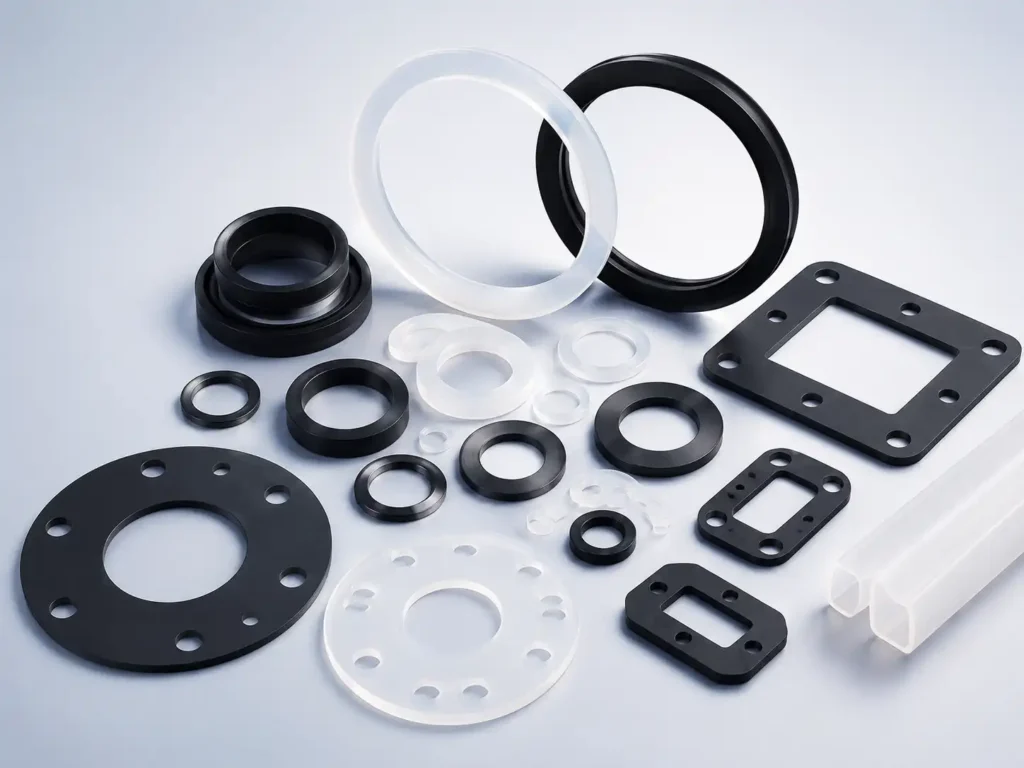
For a Silicone gaskets & seals, record the uncompressed thickness, installed gap, sealing footprint, and fastening arrangement. Describe uneven surfaces or dimensional variation. These details help the supplier understand the part’s function and identify what must be evaluated.
Use this checklist before requesting a hardness recommendation:
| Requirement | Information to provide |
| Part geometry | Drawing, contact area and critical dimensions |
| Thickness | Nominal value, tolerance and installed gap |
| Assembly loading | Fastener arrangement and available force |
| Sealing objective | Medium, pressure conditions, and acceptance test |
| Material validation | Sample configuration and required evidence |
Please request the relevant compression data when the assembly force is a factor. A hardness reading alone cannot establish the load needed to compress the finished gasket.
Operating Conditions and Material Evidence
Include continuous and peak temperatures, exposure duration, contact media, and repeated loading. Confirm that the proposed compound has supporting evidence for those conditions.
A harder sheet should not automatically be described as more heat-resistant, more wear-resistant, or longer-lasting. Formulation and the application matter. Compare the properties relevant to the job, and avoid substituting hardness for a separate performance requirement.
Specify and Verify Hardness Before Ordering
A usable purchase specification identifies both the required result and how it will be checked. Agree these details before production, particularly when incoming inspection determines whether a batch is accepted.
- Identify the material. Record the compound or agreed material designation, sheet form, and any backing.
- Define the hardness requirement. State the scale and the agreed target or acceptance range.
- Name the test method. Confirm the applicable method and version with the supplier or testing laboratory.
- Agree measurement conditions. Document specimen preparation, conditioning, support, and reading time as required by that method.
- Connect records to the batch. Keep sample identification, test results, and the approved specification together.
- Validate the application. Test representative parts in the intended assembly before approving the material for production use.
Measurement conditions deserve particular attention for thin sheets. Instrument guidance on specimen thickness explains why the material beneath the indenter can affect testing. A reading taken directly on a thin sheet may not be comparable with a result obtained from a prepared specimen.
If testing requires a different specimen configuration, please agree on how it represents the supplied sheet. Record the arrangement rather than presenting unlike measurements as equivalent. A matched procedure makes later disagreements easier to investigate.
Frequently Asked Questions
Q1: Can Two Silicone Sheets With the Same Shore A Value Perform Differently?
Yes. Matching hardness does not establish that other properties match. Review the requirements that matter to the application, such as tensile behavior, tear resistance, or compression set, using comparable test information. Approval should reflect the finished part’s requirements rather than the hardness number alone.
Q2: Can Ultra thin silicone membrane Be Tested Directly?
It depends on the selected method, instrument, and specimen. Do not assume that placing any thin sheet on a bench produces a comparable result. Ask the testing laboratory to confirm an appropriate procedure and document the specimen configuration. Avoid introducing an improvised stacking method without checking its suitability.
Q3: What Should Buyers Do When a Sample Differs From Its Datasheet?
First, confirm that the sample corresponds to the stated material and batch. Then compare the scale, method, specimen preparation, and measurement conditions. Arrange a repeat measurement using an agreed procedure before concluding. Keep the acceptance decision tied to the purchase specification and application validation.