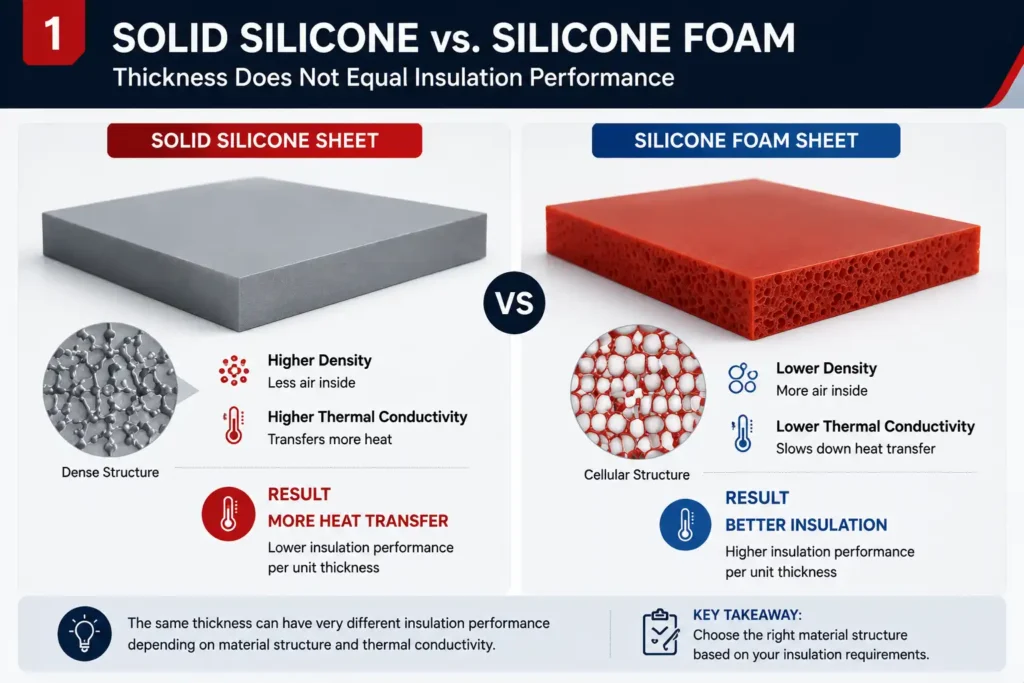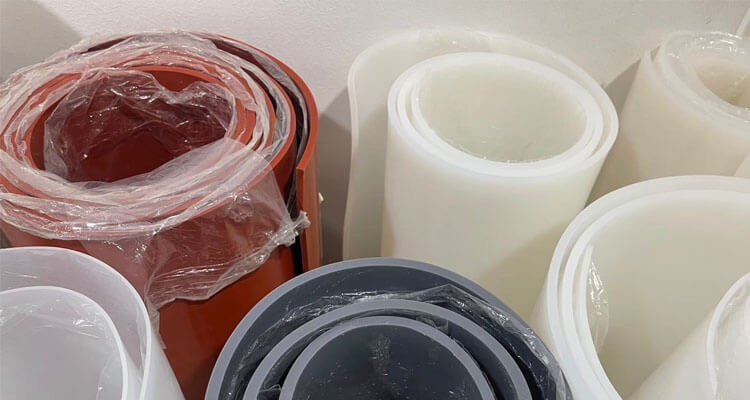
Production managers know the pattern: a silicone sheet installed on a hot press, oven, or laminator performs well for the first weeks, then the edges pull in, the surface hardens, gasket lines start leaking, and hairline cracks appear around bolt holes. Every replacement means downtime, scrap product, and wasted material, and most buyers respond by reordering the same sheet, expecting a different result. The real problem is rarely bad luck. Shrinkage and cracking are predictable material failures, and they can be engineered out at the specification stage.
A high temperature silicone sheet that will not shrink or crack is one built on a heat-stabilized, correctly cured, and post-cured compound, reinforced where mechanical stress exists, with a compression set below about 15 percent and a temperature rating that leaves 20 to 30 degrees C of margin above your real operating conditions. Shrinkage and cracking are failure modes you specify away, not defects you discover after installation.

The sections below explain why these failures happen, what material features prevent them, and exactly what to verify before placing an order.
Why Silicone Sheets Shrink or Crack at High Temperatures
Silicone sheets shrink or crack for three distinct reasons: continued thermal curing that pulls the material in, compression set that flattens it under pressure, and mechanical stress that starts tears at points of concentration. Identifying which mechanism is at work in your application is the first step to preventing it, as each requires a different countermeasure.
Thermal Aging and Post-Cure Shrinkage
Silicone rubber sheet can continue to crosslink after leaving the factory, especially in peroxide-cured compounds where curing residues remain active. As the sheet sits at operating temperature, residual volatiles escape and additional crosslinks form, so the material densifies and its dimensions pull in. Linear shrinkage depends heavily on curing conditions: the curing agent type, curing temperature, and article size all influence how much a sheet moves after installation. A properly formulated and post-cured sheet completes most of this movement before it reaches your line, while a poorly cured one spends its first months shrinking on your machine. The Si-O molecular backbone of silicone rubber itself is highly heat stable; in most cases it is the compound formulation and cure completeness, not the polymer, that decides whether a sheet stays dimensionally true.

Compression Set and Permanent Deformation
Compression set measures how completely a material returns to its original thickness after prolonged compression at temperature, and it is the single most important number for sealing and hot-press applications. Ordinary compounds gradually lose elasticity as heat and pressure combine, ending up permanently flattened. A flattened gasket loses sealing force, a flattened press pad distributes pressure unevenly, and both show up first as quality defects and leaks. Compare the two classes of material:
| Grade | Compression Set (ASTM D395) | Behavior at 200 to 250 degrees C |
| Standard silicone compound | Up to 20 percent or more | Gradual flattening, hardening, loss of rebound |
| Low compression set HT compound | 8 to 15 percent | Retains 90 percent or more resilience through long cycles |
Mechanical Stress and Crack Initiation
Cracks rarely start in the middle of a sheet. They begin where stress concentrates: around die-cut holes, along cut edges, at clamping points, and wherever the sheet bends around corners. Low tear strength turns those stress points into crack starters, and repeated thermal cycling works the crack deeper with every heat-up and cool-down. Tensile strength and tear resistance, therefore, matter as much as the temperature rating for anyone cutting the sheet into shaped gaskets.
What Makes a High Temperature Silicone Sheet Dimensionally Stable
A Silicone Vacuum Press Sheet is the product of three deliberate choices: a heat-stabilized compound, a complete cure system, and reinforcement where shrinkage and tearing pressure would otherwise win. Each choice attacks one of the failure mechanisms described above.
Compound Formulation and Cure System
Heat-stabilized formulations add fillers such as iron oxide, cerium oxide, and fumed silica, which preserve tensile strength and elasticity at temperatures where standard compounds lose them. The cure system matters just as much. Platinum-cured silicone leaves no peroxide byproducts, so there is far less post-curing movement and far fewer volatiles to escape at operating temperature. Proper post-curing in the factory drives off residues and completes crosslinking before shipment, which is why sheets from a controlled post-cure process stay flat while others shrink in place. When comparing suppliers, ask specifically about the cure system and post-cure conditions, because two sheets with the same temperature rating can behave very differently after their first month in service.
Reinforcement Against Shrinkage and Tearing
Where a sheet is pressed, stretched, or cut, reinforcement is the cheapest insurance available. Fiberglass or fabric insert locks dimensions in place, improves tear resistance around holes and edges, and resists the creep and thickness loss that plague unreinforced sheets under repeated hot pressing. Well-built reinforced sheets hold compression set below 5 percent after thousands of hot-press cycles, which is why vacuum laminators, heat transfer presses, and photovoltaic module lines specify them. The tradeoff is slightly reduced flexibility, so reinforcement belongs where the sheet is loaded, not where it must wrap tightly around small radii.
Key Specs to Verify Before Ordering
Five specifications separate a stable sheet from a shrinking one: true temperature rating, compression set value, mechanical retention after heat aging, thickness tolerance, and documented test data. Temperature ratings deserve special skepticism, because many datasheets quote intermittent peaks as if they were continuous ratings:
| Grade | Continuous Operation | Intermittent Peak |
| General purpose | -50 to 180 degrees C | 200 degrees C |
| Heat-resistant grade | -60 to 220 degrees C | 250 degrees C |
| Special high-temperature grade | Up to 250 degrees C | 280 to 300 degrees C |
Verify each of the following before committing to a supplier:
- Continuous versus peak temperature, clearly labeled, with your operating point below the continuous rating.
- Compression set per ASTM D395, target 15 percent or less at the relevant temperature and duration.
- Tensile and elongation retention after heat aging per ASTM D412, with premium compounds retaining more than 85 percent tensile strength after 500 hours at 250 degrees C.
- Hardness drift after aging should ideally be within plus or minus 3 Shore A.
- Thickness tolerance and width consistency, since uneven thickness creates uneven pressure in pressing applications.
Pair these checks with the mistakes buyers most commonly make: ordering without verifying heat resistance, skipping batch certificates, and comparing quotations on price alone. Every one of them costs more in downtime than it saves in unit price.
Best Practices to Prevent Shrinkage and Cracking in Service
Even the best sheet fails early if it is operated at its limit, installed unevenly, or never inspected, so service practice completes what specification starts. Two areas deserve attention once the material is on site.
Operating Practices That Extend Sheet Life
Select the continuous temperature grade, not the peak, and maintain a 20 to 30 degrees C margin from real operating conditions to prevent excessive consumption of the compound’s thermal budget. Keep the sheet away from open flames and heating elements, torque fasteners evenly so the sheet is not stretched at clamping points, and use die-cut rather than hand-cut parts for gaskets with holes, since clean die-cut edges do not concentrate stress the way knife cuts do.
Verification Tests to Request From Suppliers
Ask for heat-aging data on the actual compound: tensile retention and hardness drift after aging at your operating temperature, not just room-temperature figures from a generic datasheet. Request a certificate of analysis tied to your production batch, and run sample sheets on the real machine for a trial period before committing to volume. A supplier that cannot produce aging data for its compound is selling you a rating, not a performance guarantee.
Frequently Asked Questions
Q1: At what temperature does the silicone sheet start to shrink?
Shrinkage is driven by incomplete curing rather than by a specific temperature. A standard compound can begin moving measurably during the first weeks at 200 degrees C, while a fully post-cured, low compression set grade stays dimensionally stable at continuous temperatures up to 230 to 250 degrees C.
Q2: Is platinum cured silicone sheet for high temperature better than peroxide-cured?
For most high-temperature work, yes. Platinum curing leaves no peroxide byproducts, so the sheet has less post-cure movement, lower volatility, and better long-term elasticity. Peroxide-cured sheet costs less but shrinks and hardens sooner under sustained heat.
Q3: How long does a high temperature silicone sheet last in continuous service?
A properly selected and post-cured sheet typically serves 5 to 10 years in industrial sealing roles, and reinforced grades survive thousands of hot-press cycles. Running at or above the continuous rating, or installing without thermal margin, can cut that life by more than half.