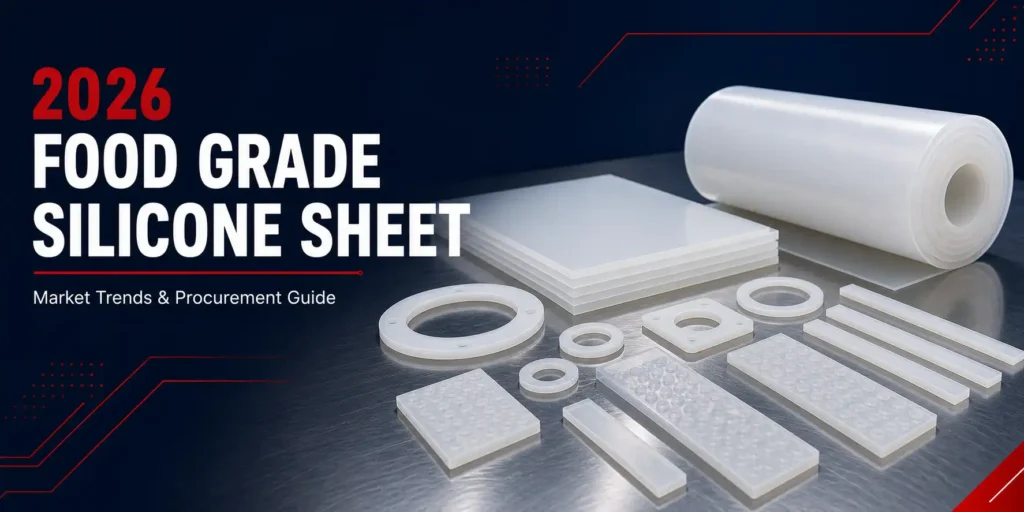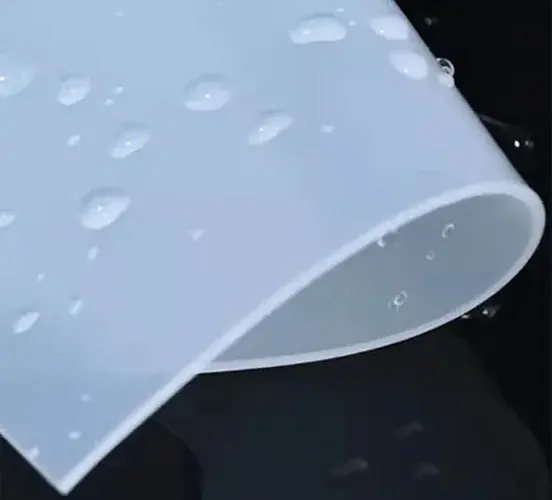
Bakeries, food processors, and kitchenware brands are replacing disposable parchment and foil with reusable non-stick liners. Most kitchen mats today are made of silicone sheets. However, not all silicone sheets are equal. The wrong thickness can lead to mats warping, food sticking, unpleasant smells, and failed compliance checks, as can an unclear grade or an unverified supplier. Here’s a guide to the important specs, certifications, sizes, and customization options to consider before placing a bulk order.
The right silicone sheet for kitchen mats and baking liners is a food-grade, platinum-cured silicone sheet reinforced with fiberglass mesh. These sheets are generally 0.4 to 1.2 mm thick and have a continuous temperature range of about -40 degrees C to 230 degrees C, with documented compliance with FDA 21 CFR 177.2600 and LFGB food contact standards. Matching the sheet with your pan size and checking the certification documents can eliminate most of the buyers’ quality and safety issues.
So, let’s take a deeper look at each of the selection factors.
Silicone Sheet is the best for kitchen mats
A silicone sheet is superior to parchment paper and aluminum foil as kitchen mats because it is inherently non-stick, chemically inert, and stable over a much wider temperature range, while it lasts thousands of uses instead of one use.
| Feature | Silicone Sheet | Parchment Paper | Aluminum Foil |
| Re-usable | 2,000+ use | Single usage | Single use |
| Temperature range | -40 to around 230 degrees C | Scorches history 220 degrees C | Does not heat evenly |
| Non-stick coating | Permanent, no grease needed | Medium, may require oil | Oil-free cleaning sticks |
| Disposable | Wipe or dishwasher | Hard with burned remains | — |
| Cost long term | Low per use | Recurring Purchase | Recurring Purchase |
Non-Stick Performance and Even Heat Spread
Quality sheet cleanly releases cookies, pastries, and sticky doughs with no oil or spray. It lies flat between the pan and food, ironing out hot spots on metal trays for more even browning, most important for delicate products like macarons and meringues.
Cost savings and reusability for food businesses
One silicone mat will replace hundreds of sheets of parchment over its lifetime. That means less liner spend per batch, less waste, no downtime to restock consumables for high-volume bakeries and food processors, and a clear sustainability benefit for brands to communicate.
Key Specifications of Materials to Look For
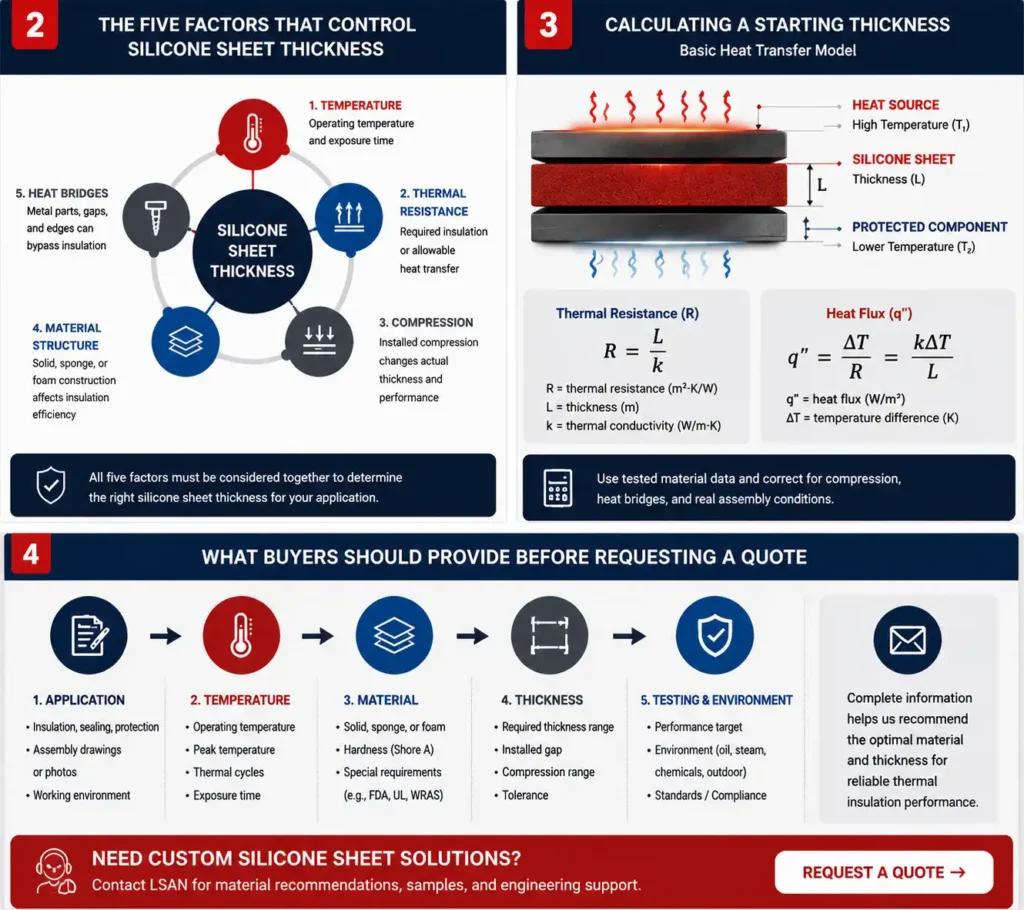
Buyers should assess thickness, temperature range, reinforcement structure, and certifications. They define how the sheet behaves in real production conditions. The core of most sheets used in kitchens is fiberglass mesh and it is coated both sides with food-grade silicone. It has the strength of fabric and the flexibility of silicone.
| Specification | Typical Range |
| Thickness | 0.4 mm to 1.2 mm |
| Temperature range | -40°C to 230°C, short peaks to 250°C |
| Hardness | 50 to 60 Shore A |
| Standard size | 30 x 40 cm, 33 x 53 cm, 40 x 60 cm, half and full sheet |
| Reinforcement | Food-grade fiberglass mesh, silicone-coated |
| Certifications | FDA 21 CFR 177.2600, LFGB, RoHS |
Heat Limits and Temperature Resistance
Silicone rubber’s Si-O-Si molecular backbone gives the material excellent thermal stability, which is why it stays flexible in the freezer and stable in the oven. Kitchen sheets are rated for continuous use up to about 230 degrees C with short excursions higher. In daily use, there are two limits to respect: never put the sheet on open flames, grill elements, or broilers and never exceed the rated maximum, because overheating degrades the coating and reduces the life of the product.
Fiberglass Mesh Reinforcement & Thickness
Light baking is suitable for flexible thin sheets of about 0.4 mm. Sheets 0.7 mm and over keep their shape on big trays and have a longer life in commercial use. The fiberglass mesh is essential for serious baking, as it prevents the mat from stretching or twisting at high temperatures and helps distribute heat evenly.

Food-Grade Use Certifications and Safety Standards
If you intend to use the silicone sheet in the kitchen in contact with food, you need to have documented FDA and LFGB compliance. Without these certificates, you cannot trust the material for direct contact with food at baking temperatures.
| Certification | Region | What It Certifies |
| FDA 21 CFR 177.2600 | United States | Food contact safe for repeated use |
| LFGB | Germany and EU | Tighter testing for migration |
| RoHS | European Union | No restricted hazardous substances |
The curing chemistry is as important as the certification. Platinum-cured silicone contains no peroxide byproducts; therefore, it imparts no odor or taste even after long exposure to hot oils and acidic foods. Peroxide-cured sheet can leave residues that, under heat can appear as smell or discoloration. Test it for fillers too: pinch or twist it and if it leaves a white mark, or smells strongly of plastic when warmed, it is heavily filled. Always request your sample with a Certificate of Analysis and third-party reports.
Match Size and Type for Your Application
The best sheet is the one that fits your pan. Oversize mats curl, fold, and deform cookies. Undersize mats leave exposed tray areas where burned residue can accumulate.
Size Guide: Sheet to Pan Dimensions Matching
Measure inside the bottom of the tray w/o rim:
| Pan Size | Standard Sheet Size |
| Half sheet (approx. 9.5 x 13 inches) | Approx. 8.5 x 12 in |
| Half sheet (approx. 13 x 18 in) | Approx. 11.6 x 16.5 in |
| Full sheet (approx. 18 x 26 in) | Approx. 16.5 x 24.5 in |
Commercial tray sizes vary more than retail bakeware. When processing lines and bakery equipment are included, consult your supplier before standardizing on tray sizes.
Silicone Sheet Custom Cut
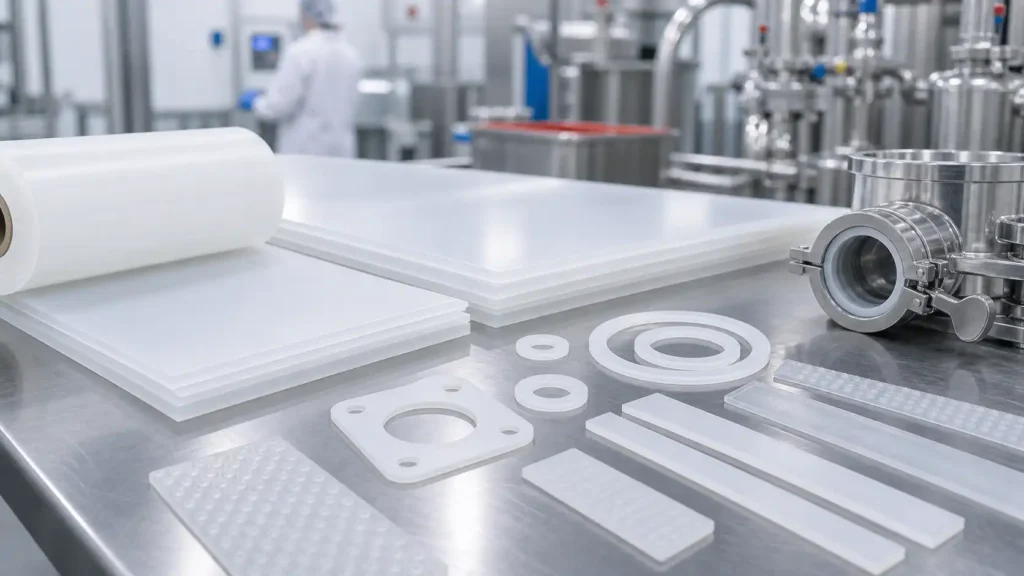
You can cut the silicone sheet cleanly with scissors or a blade to fit odd trays, oven floors, or work tops. Die cutting by the manufacturer provides consistent edges and accurate dimensions for multiple production runs. Carefully cut through the fiberglass core, and inspect the cut edges to ensure that no exposed fibers come in contact with food.
Durability, Maintenance, and Cleaning
With proper cleaning and storage, a quality sheet will last more than 2,000 baking cycles. Abrasive tools, blades, and overheating can dramatically reduce that life. Wash in warm, soapy water, or run the sheet through the top rack of the dishwasher; a paste of baking soda will take off baked-on grease without scratching. Store sheets flat or rolled loosely, not folded. Replace any sheet that is cracked, deeply discolored, or has an odor that cleaning cannot remove; these indicate the coating is breaking down.
B2B Buyers Have Custom and OEM Options
Most suppliers provide OEM customization for thickness, size, color, surface finish, and logo printing. Minimum order quantities are easy to meet, and samples are available before mass production. Typical choices include a manufacturing thickness of 0.2 to 50 mm, Pantone-matched colors, a logo, silk-screening or embossing, and die-cutting to your tray dimensions.
Before you go for volume:
- Request real batch production FDA and LFGB certificates.
- Order samples and test them under your real temperature and product condition.
- Check filler level or ash content if purity claims are important for your market.
- Agree in writing on the tolerances for thickness and dimensions.
FAQs (Frequently Asked Questions)
Q1: Can I put food directly on silicone baking mats?
Yes, if the sheet is certified food grade. FDA 21 CFR 177.2600 and LFGB compliance mean this product is safe for food contact. Silicone is inert and will not impart any odor, taste or chemicals at normal baking temperatures.
Q2: What is the difference between peroxide-cured silicone sheet and platinum-cured silicone sheet?
Platinum cure produces no peroxide by-products, resulting in lower volatility, no odor transfer and improved long-term stability. Peroxide-cured sheet is cheaper but can off-gas small amounts of curing residue when heated. This is a point to consider for food use.
Q3: How often should silicone baking mats be replaced in a commercial kitchen?
A mat should last for about 2,000 cycles if used correctly. Inspect mats regularly and replace if cracking occurs, if there is permanent warping, loss of non-stick performance, or persistent odor.