Food safety regulations are tightening across major markets, and processors are phasing out conventional rubber and PVC from anything that touches food. Food-grade silicone sheet has become the default material for seals, liners, and machine pads on modern production lines, yet many buyers are unsure where it fits best and which grade each application requires. This guide maps the main applications and shows how to match properties, certifications and formats to each use.

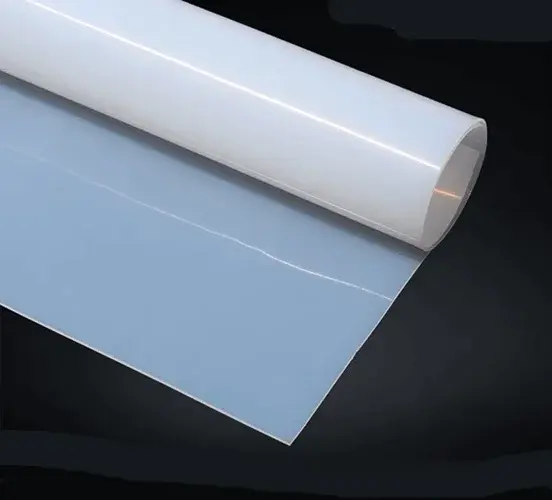
Food grade silicone sheet is mainly used for seals and gaskets on processing equipment, conveyor liners and anti-stick surfaces, bakery mats and oven seals, and heat seal pads or vacuum machine parts in packaging machinery. Its compliance with FDA or EU food contact rules, working range of about -60 to 230 degrees C, chemical inertness and easy cleaning make it the standard sheet material for direct and indirect food contact.
Here is a closer look at each application area and how to specify material for it.
Why Food Grade Silicone Sheet Is the Standard for Food Contact
Food grade silicone sheet sets the standard for food contact because it is certified non-toxic, chemically inert and thermally stable from freezer to oven. At the same time, ordinary industrial rubber cannot legally or technically match that performance. The molecular backbone of silicone rubber gives the material the stability that repeated food contact and thermal cycling demand.
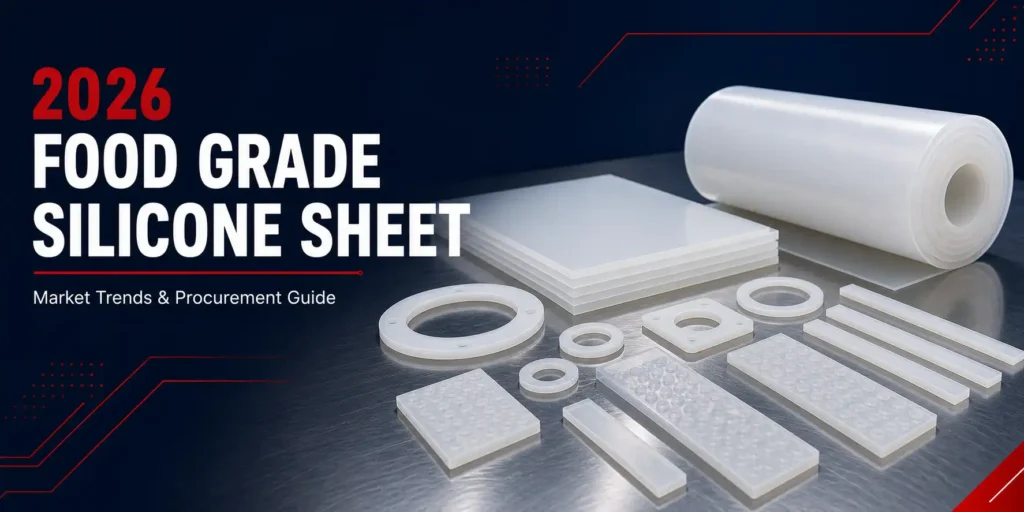
| Specification | Typical Range |
| Thickness | 0.5 mm to 10 mm, up to 20 mm on request |
| Temperature range | -60 degrees C to 230 degrees C |
| Hardness | 40 to 80 Shore A |
| Colors | Translucent, white, red, blue, gray |
| Formats | Rolls, sheets, die-cut parts |
| Certifications | FDA 21 CFR 177.2600, EC 1935/2004, LFGB, RoHS |
Key Properties That Suit Food Environments
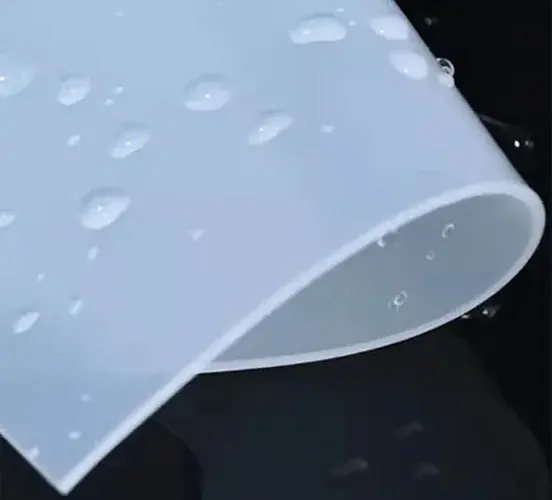
Four properties drive adoption in food lines. Thermal stability keeps the sheet flexible in freezers and stable in ovens and steam. Chemical inertness means no reaction with food acids, fats or cleaning agents. A naturally non-stick surface stops dough and sugar from adhering to equipment. Mechanical resilience lets gaskets survive thousands of compression cycles.
Food Grade vs Industrial Silicone Sheet
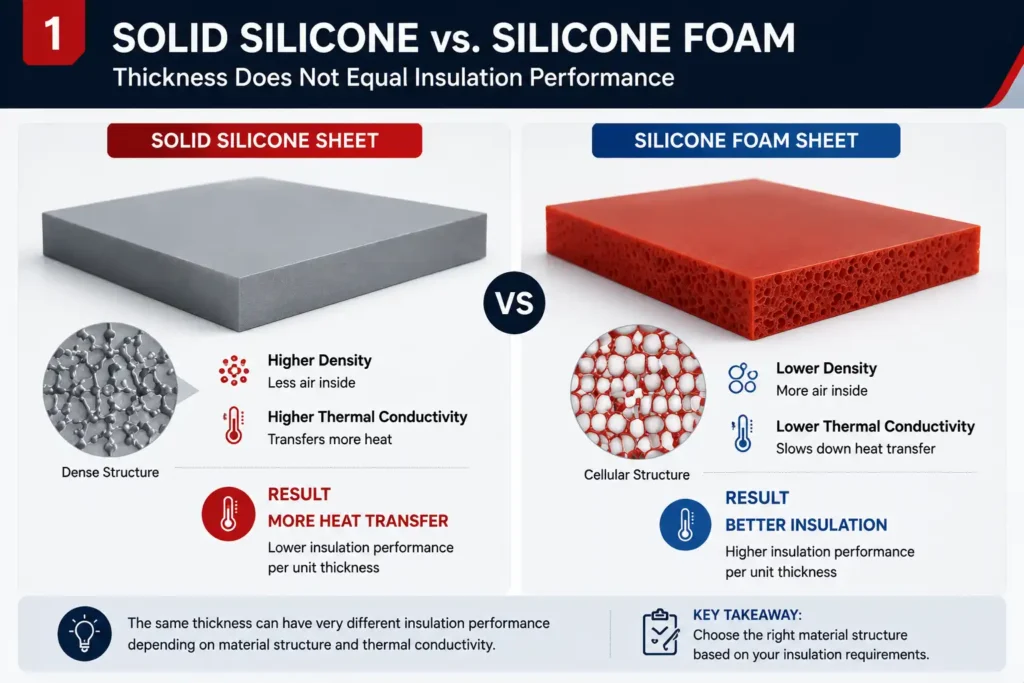
Industrial silicone sheets may look identical, but it carries no food contact certification and may contain additives unacceptable in food processing. It also differs sharply from other common food rubber choices:
| Property | Food Grade Silicone | NBR | EPDM | PVC |
| Max working temperature | About 230 degrees C | About 100 degrees C | About 120 degrees C | About 60 degrees C |
| Certified food contact | Yes | Rarely | Limited | No |
| Odor and taste transfer | None | Possible | Possible | Strong |
| Non-stick release | Excellent | Poor | Moderate | Poor |
| Service life on food lines | 5 or more years | 1 to 2 years | 2 to 3 years | 1 to 2 years |
Applications in Food Processing Lines
On processing lines, food grade silicone sheets serve three main roles: seals and gaskets for equipment, liners for conveyor and transfer surfaces, and bakery mats or oven seals where heat resistance is critical. The same sheet formats serve dairy, beverage, meat and bakery plants with only specification changes.
Seals and Gaskets for Processing Equipment
Tank flanges, mixer lids, pump housings, and pipe connections in dairy, brewing, and meat plants rely on gaskets cut from certified sheets. The material handles hot oil splash, acidic products, and repeated CIP washdowns without swelling. Softer compounds around 40 to 50 Shore A suit lids that open frequently, while harder grades hold shape on static flanges.
Conveyor Liners and Anti-Stick Surfaces
Lining conveyor sections, chutes and transfer tables solves two chronic problems: product sticking and abrasive wear on stainless surfaces. Sticky items such as dough and caramel release cleanly, so lines run longer between cleaning stops and waste less product. In meat and poultry plants, liners also protect belts from fat absorption and simplify sanitation.
Baking Mats, Oven Seals, and Tray Liners
Industrial bakeries use the sheet as pan and oven liners because it withstands continuous baking temperatures without fumes or deformation. The same material serves as oven door seals and tray pads, where thermal cycling rapidly hardens ordinary rubber. Consistent thickness also produces more even heat transfer across the baking surface.
Applications in Food Packaging Machinery
In packaging, food grade silicone sheet is used mainly for heat seal pads on sealing machines and gaskets on vacuum packaging equipment, where it must survive repeated high-temperature contact and pressure. Packaging machinery runs faster cycles than processing lines, so compression recovery and clean release become the deciding properties.
Heat Seal Pads and Vacuum Packaging Equipment
Heat sealers use silicone pads as the resilient backing that presses film against the sealing bar, creating airtight seams thousands of times per shift. Even thickness and thermal stability produce consistent seal quality, while the non-stick surface stops melted film from adhering. Vacuum machines and tray sealers use cut gaskets to hold vacuum through repeated cycles.
Release and Barrier Liners for Packaging Lines
Beyond sealing, the sheet serves as release liners on forming stations, separator pads between stacked trays and protective linings in transport tubs. Wherever packaged goods need a clean, food-safe sliding or separating surface, certified sheet is the low-friction answer.
How to Choose the Right Sheet for Your Application
Choosing correctly comes down to two steps: verify the certification and documentation, then match hardness, thickness and color to the machine and process. A compliant but wrongly specified sheet will still fail in service.
Certifications and Documentation to Request
For the US market, confirm compliance with FDA 21 CFR 177.2600, which governs rubber articles for repeated food contact. For Europe, require conformity with EC 1935/2004, the EU framework for food contact materials. Please request the certificate of analysis associated with your production batch from each supplier, along with third-party reports, and retain these documents for audits. Platinum-cured material is preferred because it leaves no peroxide residues.

Hardness, Thickness and Color Coding
Match hardness to the duty: 40 to 50 Shore A for dynamic lids, 60 to 70 for standard gaskets and pads, harder grades for high-wear positions. Thin sheets around 1 to 2 mm suit liners while 3 mm and above suit gaskets. Color is a compliance tool: white shows residue during washdown inspection, while blue is the industry convention on food lines because no natural foods are blue, and metal-detectable blue compounds let inline detectors catch fragments under HACCP procedures.
Maintenance and Compliance Best Practices
A certified sheet only stays compliant if it is cleaned correctly, inspected regularly and replaced before degradation creates a contamination risk. Clean with food-safe detergents compatible with CIP systems, avoid abrasive tools, and store sheets flat or loosely rolled. Replace any sheet showing cracking, deep discoloration, permanent compression set or persistent odor. Record batch numbers and replacement dates so compliance documentation stays audit-ready.
Frequently Asked Questions
Q1: How long does food grade silicone sheet last in continuous production?
Well-specified material typically serves 5 or more years in static sealing roles and several years as conveyor liners, depending on temperature exposure and cleaning frequency. Inspect on a schedule and replace based on condition, not by calendar alone.
Q2: Can food grade silicone sheet be supplied with adhesive backing or custom die-cut shapes?
Yes. Most manufacturers offer pressure-sensitive adhesive backing, slit rolls and die cutting to your drawings, which suits gasket series production and machine-specific pads. Confirm that adhesive and fabrication steps also meet food contact requirements.
Q3: What is the difference between FDA and EC 1935/2004 compliance?
FDA 21 CFR 177.2600 is the US regulation defining permitted ingredients and extraction limits for rubber articles in repeated food contact. EC 1935/2004 is the broader EU framework that requires materials not to migrate harmful substances into food. Most markets require both, so ask suppliers for dual-compliance documentation.