As a multifunctional material, silicone rubber sheet has been widely used in electronics, automotive, medical, food, industrial manufacturing and other fields by virtue of its excellent high temperature resistance, chemical stability, electrical insulation and environmental protection properties. However, different industries have significant differences in the performance requirements of silicone rubber sheets, and standardized products are often difficult to meet the refined requirements of specific scenarios. Therefore, customized silicone rubber sheets have become a key solution for enterprises to optimize production efficiency and product quality. In this article, we will provide an in-depth analysis of how to customize silicone rubber sheets according to your needs, and introduce the characteristics and application scenarios of seven common types of silicone rubber sheets.
I. Silicone Rubber Sheet Customization Process
Before customizing your silicone rubber sheet, you need to be clear on a few key needs.
1. Define Requirements
- Design Drawings: Provide design drawings or 3D models with dimensions, tolerances, and structural details (e.g., holes, chamfers, etc.). If you do not have design capability, you can collaborate with us and use our technical team to optimize the solution.
- Surface Treatment Requirements: Smooth or frosted, need to specify your requirements in advance.
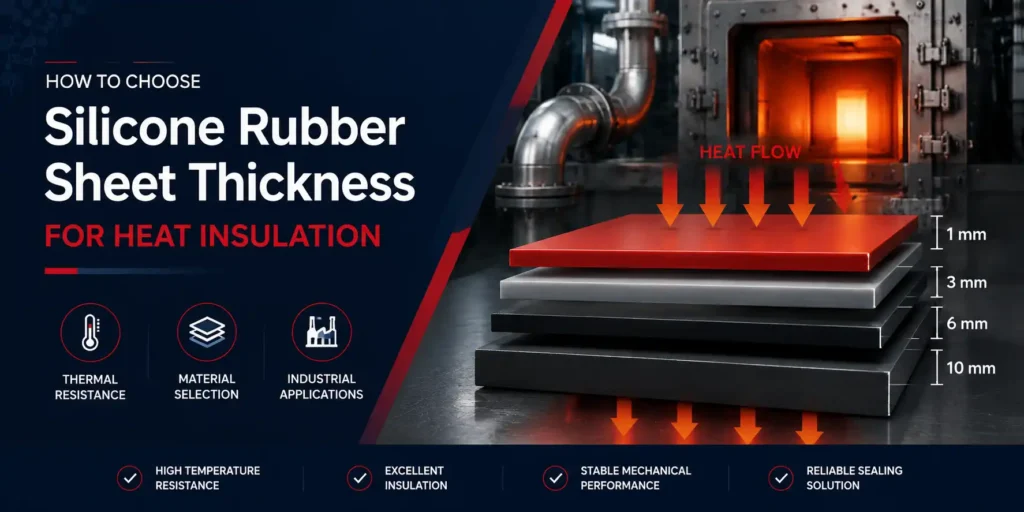
- Environment: Determine the environment in which the silicone rubber sheet will be used. For example, will it be in a high, low or normal temperature environment?
2. Material and Performance Selection
- Base Material: Choose regular silicone rubber sheet, food grade silicone rubber sheet (FDA compliant), vapor phase silicone rubber sheet (high purity), etc. according to the application.
- Functional Parameters: Hardness (Shore A), temperature resistance range (-50℃ to 300℃), electrical conductivity (anti-static), flame retardant grade (UL94 V-0), etc.
3. Production Process Matching
- Molding: It is suitable for complex structures, liquid injection molding is suitable for high-precision parts, and the foaming process can improve shock absorption performance.
- Special Process: Such as adding conductive filler (carbon black) to realize anti-static, or adding flame retardant to enhance the fire resistance.
4. Sample verification and mass production
- Confirmation of performance (e.g., tear strength, insulation, flame retardancy) through sample testing.
- Ensure compliance with industry standards (e.g., FDA for medical grade, UL for electronics).
Ⅱ. Seven Types of Silicone Rubber Sheet Characteristics and Customized Applications
1. Regular Silicone Sheet
- Features: Basic model, cost-effective, temperature resistance range -40℃~180℃, good elasticity, suitable for cushioning pads, sealing strips and other general-purpose scenarios.
- Applications: Home anti-slip cushion, shock absorbing layer for industrial equipment.
2. Food Grade Silicone Sheet
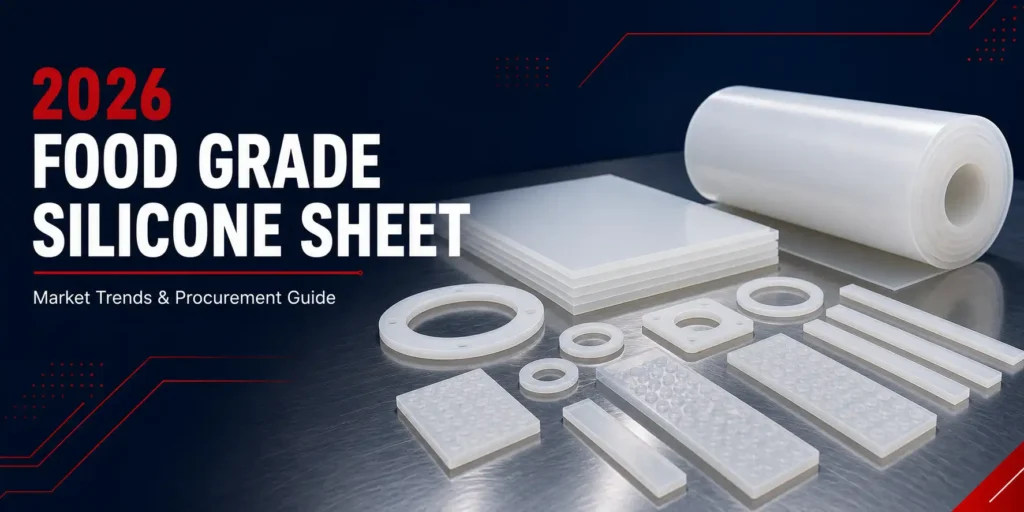
- Features: Non-toxic and odorless, FDA certified, high temperature sterilization resistant, suitable for direct contact with food environment.
- Applications: Baking molds, food processing conveyor belts, kitchen appliance gaskets.
3. Gas Phase Silicone Sheet
- Features: High purity, low precipitation, excellent chemical stability, suitable for harsh environments.
- Applications: Medical equipment sealing, semiconductor production plant protection.
4. Insulating Silicone Sheet
- Features: Dielectric strength up to 43KV, arc discharge resistance, suitable for high-voltage environments.
- Applications: Substation insulating mat, electronic component encapsulation, high voltage cable protection layer.
5. Anti-static silicone sheet
- Features: Surface resistivity 10³~10⁹Ω, can quickly conduct away static electricity, to avoid damage to electronic components.
- Applications: Electronic assembly workshop, explosion-proof equipment lining.
6. High Temperature Resistant Silicone Sheet
- Features: short-term temperature resistance up to 350 ℃, long-term resistance to 200 ℃, excellent anti-aging properties.
- Applications: Automobile engine insulation pads, industrial high-temperature pipe sealing.
7. Flame Retardant Silicone Sheet
- Features: UL94 V-0 certified, no toxic gas release during combustion, high safety.
- Applications: Aviation interior materials, fireproof building materials, power equipment protective layer.
Ⅲ. Advantages of Customized Silicone Rubber Sheets
1. Precise matching of needs: Avoid redundancy or insufficient performance and optimize costs.
2. Flexibility and Innovation: Support personalized adjustment of color, hardness and thickness to meet special design needs.
3. Controlled Quality: Ensure product reliability through rigorous testing (e.g., tear resistance test, chemical resistance test).
Ⅳ. Conclusion
By following these steps, you can customize the silicone rubber sheets to suit your specific needs. Through accurate demand analysis, material optimization and process matching, product performance and production efficiency can be significantly improved. For more customization details or for sample support, please contact us, Nanjing Lsan, professional team for one-stop service from design to mass production.