Silicone rubber sheeting remains one of the most versatile and indispensable materials in modern engineering. From the battery packs of the latest electric vehicles to the hygienic seals in pharmaceutical processing, this elastomer performs where others fail.
If you are asking, “What is silicone rubber sheet used for?” or trying to decide if it’s the right material for your project, this guide covers everything you need to know: core properties, top 11 applications, 2025 industry trends, and a detailed selection guide.
Understanding Silicone Rubber Sheet: The Basics
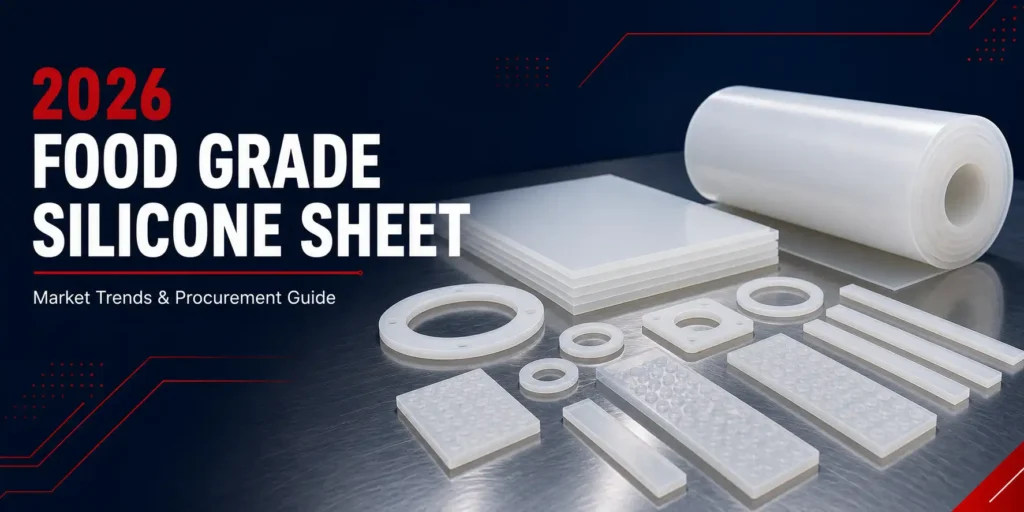
What It Is: Silicone rubber sheet is a high-performance elastomer composed of silicone polymers reinforced with silica. Unlike organic rubbers (like natural rubber), silicone has a synthetic backbone that gives it superior stability. It is typically supplied in continuous rolls, pre-cut sheets, or custom die-cut gaskets.
Key Technical Properties
- Extreme Temperature Resistance: Performs reliably from -60°C to +230°C, with specialized grades handling intermittent spikes up to 300°C.
- Chemical Inertness: Excellent resistance to ozone, UV radiation, weathering, and fungal growth.
- Electrical Insulation: High dielectric strength (~20 kV/mm), making it vital for electronics.
- Low Compression Set: It “bounces back” to its original shape even after prolonged compression, ensuring tight seals.
- Biocompatibility: Non-toxic and odorless options available for food and medical use.
Critical Distinction: Curing Systems
To make an informed purchase, you must understand the difference between the two main manufacturing processes:
- Peroxide-Cured: The industry standard. It offers excellent mechanical properties and cost-effectiveness. Best for: General industrial gaskets, automotive protection, and construction.
- Platinum-Cured: A premium process that results in a clearer, purer material with no by-products (non-yellowing/odorless). Best for: Medical devices, food processing (FDA), and pharmaceutical applications.
Top 11 Uses of Silicone Rubber Sheet in 2026
1. High-Temperature Sealing & Gasketing
This is the most common application. Silicone retains flexibility when other rubbers become brittle.
- Applications: Oven door seals, autoclave gaskets, boiler seals, and heat exchanger gaskets.
2. Electric Vehicle (EV) Thermal Management
As the EV market matures in 2026, silicone is critical for safety.
- Applications: Thermal runaway barriers between battery cells, compression pads for pouch cells, and high-voltage cable insulation.
3. Food Processing & Packaging
Food-grade silicone (FDA 21 CFR 177.2600 compliant) ensures hygiene and safety.
- Applications: Anti-slip conveyor belts for baking, heat-seal jaws on packaging machines, and dairy processing gaskets.
4. Medical & Pharmaceutical Labs
Using Platinum-cured grades (USP Class VI) ensures no contamination.
- Applications: Sterilization mats, peristaltic pump tubing liners, and vibration dampening for sensitive lab centrifuges.
5. Renewable Energy Systems
Silicone’s longevity outdoors makes it ideal for green energy tech.
- Applications: Environmental seals for Solar PV inverters, gaskets for wind turbine nacelles, and hydrogen fuel cell seals.
6. Aerospace & Aviation
Fabric-reinforced silicone is used to withstand pressure differentials.
- Applications: Cabin pressure seals, instrument panel vibration isolation, and flame-retardant (FAR 25.853) barriers.
7. Electrical Insulation
Protecting sensitive components from high voltage and moisture.
- Applications: Switchgear gaskets, outdoor LED lighting seals, and PCB thermal interface pads.
8. Industrial Automation
Serves as a mechanical aid in factories.
- Applications: Vacuum press membranes (for laminating furniture/solar panels), robotic grip pads, and shock-absorbing machinery mounts.
9. Construction & HVAC
Ensures airtightness and fire safety in buildings.
- Applications: HVAC ducting gaskets, fire-stop seals, and expansion joint covers for facades.
10. Chemical Processing
Resists degradation from specific chemicals where organic rubbers dissolve.
- Applications: Flange gaskets for tank lids, protective liners, and chemical transfer seals.
11. Consumer & DIY Projects
An accessible material for home and hobby use.
- Applications: Reusable baking mats, custom weather stripping, 3D printing heat bed liners, and gasket repair.
Comparison: Silicone vs. Other Elastomers
Why choose silicone over cheaper alternatives like EPDM or Neoprene?
| Feature | Silicone Rubber | EPDM | Neoprene | PTFE (Teflon®) |
| Temp Range | Best (-60°C to +230°C) | Moderate (-40°C to +120°C) | Moderate (-40°C to +120°C) | High (up to 260°C) |
| Flexibility | Excellent | Good | Good | Poor (Rigid/Hard) |
| Weather/UV | Outstanding | Good | Poor | Outstanding |
| Compression Set | Very Low (Good seal) | Low | Medium | High (Creeps) |
| Cost | Moderate | Low | Low | High |
| Best For… | Extreme heat, food, medical, long-life seals | Outdoor water sealing | General purpose, oils | Aggressive chemicals |
How to Choose the Right Silicone Sheet
When ordering, specify these five parameters to ensure performance:
- Temperature Requirement: Do you need standard (200°C) or high-temp (300°C)?
- Hardness (Durometer):
- 30-40 Shore A: Soft, flexible (like a pencil eraser). Good for uneven surfaces.
- 50-60 Shore A: Standard “medium” hardness.
- 70-80 Shore A: Hard, stiff (like a shoe heel). Good for high pressure.
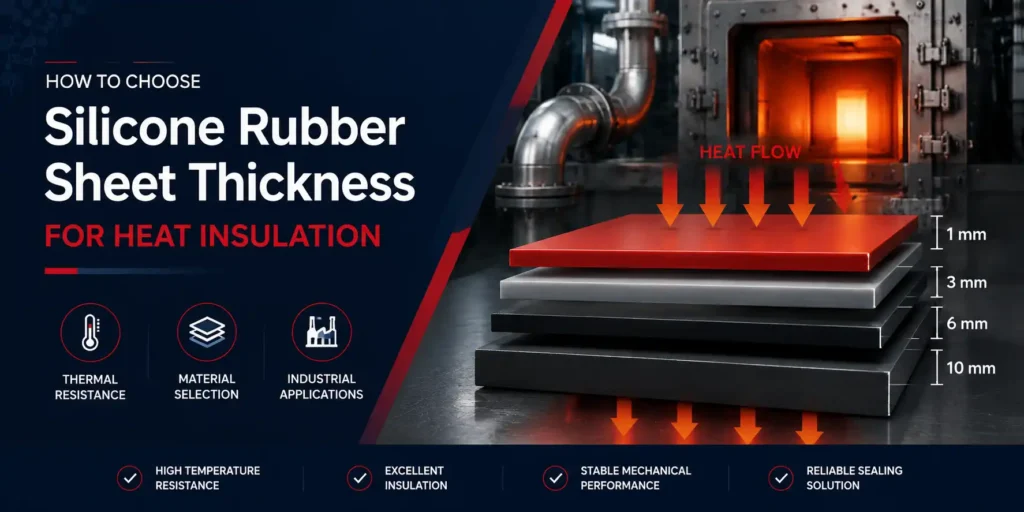
- Thickness: Standard range is 0.5mm to 12mm. Thicker sheets (up to 25mm) are used for heavy cushioning.
- Reinforcement: Do you need high tensile strength? Ask for fiberglass or polyester insertion to prevent the sheet from stretching under tension.
- Backing: Do you need a Pressure Sensitive Adhesive (PSA) backing for easy “peel and stick” installation?
Real-World Case Studies
- Bakery Efficiency: An industrial bakery switched to metal-detectable blue silicone sheets for their dough cutters. Result: Preventing foreign material contamination and increasing seal life by 40% due to better heat resistance.
- EV Battery Safety: A battery manufacturer implemented UL 94 V-0 (Flame Retardant) silicone foam sheets between cells. Result: Successfully prevented thermal propagation during safety testing, meeting new 2026 automotive standards.
Frequently Asked Questions
Q1. How long does a silicone rubber sheet last?
In standard environments, silicone can last 10 to 20 years. Its inorganic backbone means it does not degrade, crack, or become brittle from UV exposure like organic rubbers.
Q2. How do I cut silicone rubber sheet?
For thin sheets (< 3mm), heavy-duty scissors or a sharp utility knife (Box cutter) work well. For thicker sheets or precision gaskets, water-jet cutting or die-cutting is recommended. Note: Laser cutting can be done but requires good ventilation due to silica dust.
Q3. Is silicone rubber oil-resistant?
Standard silicone has fair resistance to oils but can swell. For applications involving fuel, oil, or solvents, Fluorosilicone is the required grade.
Q4. Can it be glued?
Silicone has very low surface energy (nothing sticks to it). To bond it, you must use a specialized RTV silicone sealant or a pressure-sensitive adhesive (PSA) specifically designed for silicone.
Conclusion & Next Steps
Silicone rubber sheet is a fundamental engineering material that solves complex challenges in sealing, insulation, and protection. Whether you are designing for the next generation of renewable energy or simply sealing a high-temperature industrial oven, silicone offers the reliability that 2025’s standards demand.
Success depends on quality sourcing. Ensure your supplier provides full traceability, correct curing methods, and certified grades (FDA, UL, ZZ-R-765).
Looking for the perfect silicone solution?
Contact Us today for a free consultation. We offer:
- Custom cut-to-size sheets and gaskets.
- Material samples (Standard, Food-Grade, and Flame Retardant).
- Expert engineering advice tailored to your application.